President Donald Trump said Friday that the conflict with Iran is nearing its conclusion, signaling that U.S. military objectives in the region are close to being achieved. In a post on Truth Social, Trump stated that the United States is “getting very close to meeting our objectives” and is now considering winding down what he described as its “great military efforts in the Middle East.”
The president outlined several key goals he believes are largely accomplished, including degrading Iran’s missile systems, dismantling its defense production capacity, neutralizing its naval and air forces, preventing it from developing nuclear weapons, and safeguarding allied nations in the region. Trump suggested that recent military operations have significantly weakened Iran’s overall capabilities.
A major point of focus in Trump’s remarks was the future security of the Strait of Hormuz, a critical global shipping route. He argued that responsibility for protecting the waterway should shift to allied nations that rely heavily on it for energy supplies. “The Hormuz Strait will have to be guarded and policed, as necessary, by other nations who use it—the United States does not,” Trump wrote. He added that while the U.S. would be willing to assist if asked, such support should not be necessary once Iran’s threat is fully eliminated.
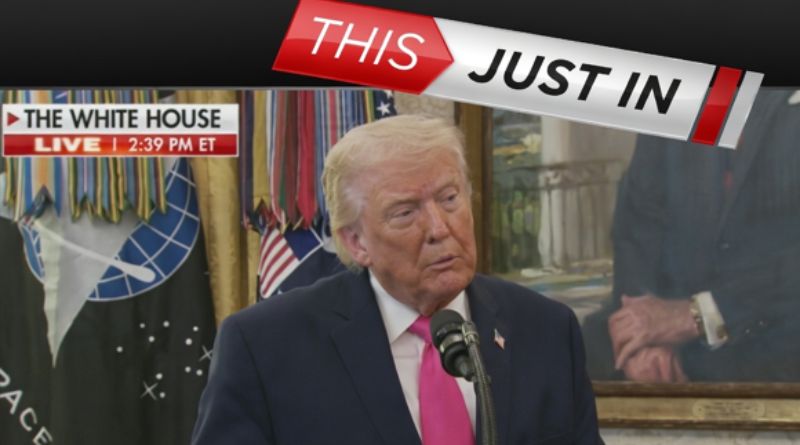
Speaking at the White House, Trump described the task of maintaining security in the strait as manageable, calling it “an easy military operation.” He pointed to Operation Epic Fury, launched on February 28, as a key factor in weakening Iran’s military strength and limiting its ability to project power in the region.
“We’re doing extremely well in Iran,” Trump said. “They have no Navy anymore … and we have the greatest Navy anywhere in the world, and it’s not even close.”
Trump also emphasized that joint operations between the United States and Israel have dealt significant blows to Iran’s naval, air, and air defense systems. In addition, he claimed that Iran’s leadership structure has been severely disrupted by the conflict.
“Their leaders are all gone,” Trump said. “The next set of leaders are all gone, and the next set of leaders are mostly gone, and now nobody wants to be a leader over there anymore.”
Later Friday, Trump told reporters that Iran is “finished” from a military standpoint, though he acknowledged that ongoing tensions continue to disrupt shipping activity in the Strait of Hormuz. He reiterated that securing the waterway would be relatively straightforward but said it would be beneficial for allied nations to contribute more resources to the effort.
Following Trump’s call for broader involvement, several countries—including the United Kingdom, France, Germany, Japan, and Canada—indicated their willingness to assist in ensuring safe passage through the strait.
The Strait of Hormuz remains one of the most important chokepoints in global energy markets, with roughly 20 percent of the world’s oil supply passing through it. Recent disruptions have slowed commercial shipping and contributed to rising energy costs. Brent crude oil has climbed to approximately $112 per barrel, while West Texas Intermediate has reached about $97 per barrel. In the United States, average gasoline prices have increased to nearly $4 per gallon.
At the same time, tensions across the region have escalated following a series of retaliatory strikes. According to reports, Iran responded to Israeli attacks on its energy infrastructure by targeting oil and natural gas facilities throughout the Middle East, including sites in Saudi Arabia, the United Arab Emirates, and Qatar.
Earlier in the week, Israel carried out a large-scale strike on Iran’s South Pars gas field—the largest natural gas field in the world. The attack prompted Tehran to launch counterstrikes against key energy facilities in Gulf Arab states, further intensifying concerns about regional stability.
These developments have raised alarms among economists and policymakers, as both South Pars and the Strait of Hormuz play crucial roles in global energy supply. Continued disruption could lead to broader economic consequences, including higher energy prices, increased costs for consumers, and potential supply shortages.
Amid growing concern from U.S. allies in the Gulf and Europe, Trump stated that Israel would refrain from launching additional strikes on the South Pars gas field unless Iran escalates further by attacking U.S. partner Qatar. He warned on Truth Social that if such an attack occurs, the United States would respond decisively, stating it would “massively” destroy the entire South Pars gas field.