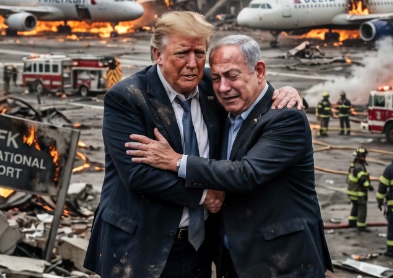
Iran has significantly escalated regional hostilities by launching ballistic missile strikes against Tel Aviv, reportedly employing controversial cluster-type warheads. According to Tehran, the operation serves as retaliation for the assassination of a high-ranking security figure. These strikes on central Israel caused significant infrastructure damage and at least two civilian deaths. The reported use of cluster munitions has drawn intense international scrutiny due to their indiscriminate nature and the humanitarian threat posed by unexploded ordnance.
This latest escalation is part of a widening conflict that has intensified in early 2026. Iran has expanded its military reach across the Gulf region, targeting U.S. bases and facilities in Kuwait, Bahrain, the United Arab Emirates, and Saudi Arabia. In response, Israel and the United States have launched strategic strikes on Iranian military and nuclear-related targets. While Israel’s defense systems—including the Iron Dome and Arrow-3—remain active, the increasing complexity of these attacks is challenging their efficacy. The hostilities are triggering major global repercussions, particularly in energy markets where supply chain fears have caused sharp price fluctuations. Despite the human and economic costs, diplomatic channels remain stalled. With both nations signaling a commitment to continued military operations, the international community faces a precarious period of uncertainty and the threat of further regional escalation.