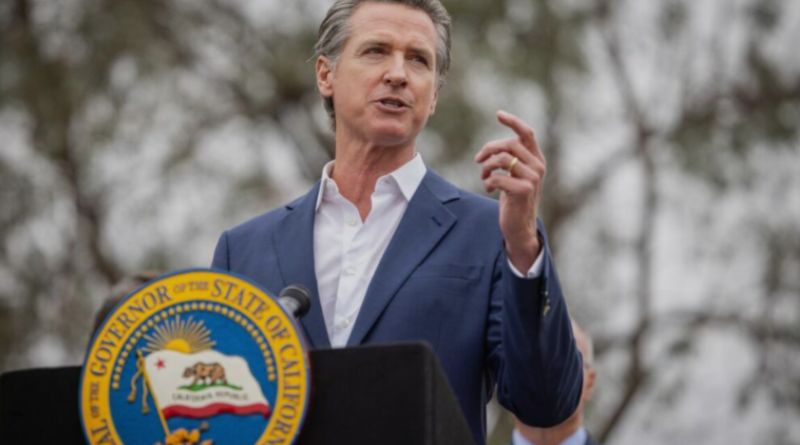
Gavin Newsom is learning firsthand that pursuing the presidency is far more challenging than it may seem. As he positions himself for a potential 2028 run, the California governor faces a difficult balancing act: proving he can manage a large, complex economy responsibly while still maintaining the support of the progressive wing of his party. Tensions between Newsom and progressive Democrats are becoming more visible, as highlighted in a recent Politico report. At the heart of the issue is California’s growing budget problem. Newsom is reportedly determined to leave office with a balanced and stable budget, knowing that any fiscal instability could be used against him by political opponents on the national stage. For many voters outside California, the state already symbolizes high taxes and heavy spending, making fiscal discipline a key test of his leadership.
Yet the numbers present a serious challenge. California’s Legislative Analyst’s Office has projected an $18 billion deficit in the upcoming fiscal year, with shortfalls potentially reaching $35 billion in the years ahead. Even these estimates assume relatively stable economic conditions, meaning a downturn could make the situation worse. Analysts point to a structural issue: state spending has been growing faster than revenue, creating a persistent gap that cannot be easily closed. To address this, progressive lawmakers and advocacy groups are pushing for a one-time wealth tax on the state’s richest residents, particularly billionaires. Supporters argue that such a measure could raise as much as $100 billion, which could then be distributed over several years to help stabilize the budget and maintain funding for key programs.
Newsom, however, has so far resisted this proposal. While he has embraced many progressive policies, he appears wary of the potential consequences of a wealth tax. California depends heavily on high-income individuals for tax revenue, and there is concern that imposing a significant one-time tax could encourage some of them to relocate, ultimately shrinking the state’s tax base. This leaves Newsom in a politically delicate position. Rejecting the wealth tax risks angering progressives, labor unions, and activists who form a crucial part of the Democratic coalition. At the same time, supporting such a measure could reinforce criticism from moderates and Republicans who argue that California relies too heavily on taxing the wealthy and expanding government spending. Beyond the political risks, the practical challenge remains unresolved. Closing a deficit of this size will likely require a combination of spending cuts, revenue increases, or both. Each option carries consequences, particularly in a state where demand for public services is high and expectations are even higher. Ultimately, Newsom’s handling of this situation will be closely watched, both within California and across the country. His ability—or inability—to navigate these competing pressures may not only shape the state’s financial future but also determine whether he can present himself as a credible national leader in the years ahead.