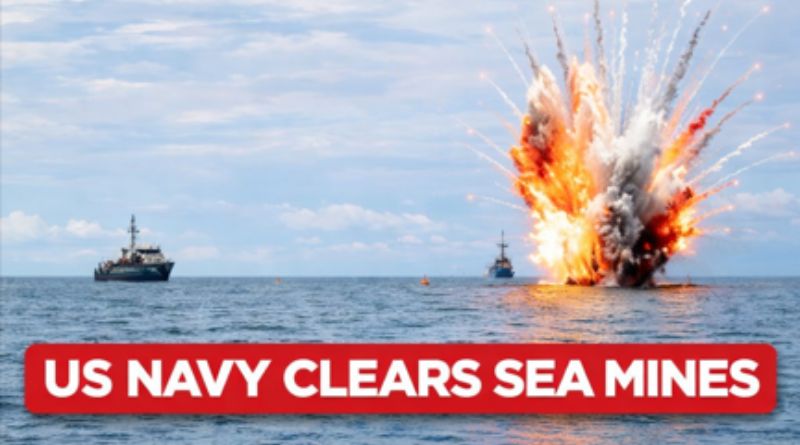
The Strait of Hormuz, a narrow passage only 21 miles wide at its narrowest point, has once again become a focal point of global concern as tensions involving Iran continue to rise. This vital waterway is far more than a geographic chokepoint—it is a lifeline for the global economy, with roughly 20% of the world’s oil supply passing through it each day. Although media coverage often highlights missiles, warships, and military posturing, a less visible but far more dangerous threat exists beneath the surface: naval mines. These hidden weapons pose a serious risk to both military and commercial vessels, with the potential to disrupt international trade and destabilize energy markets.
Naval mines are designed to remain undetected until triggered. They can sit dormant for extended periods, waiting for a passing ship to activate them. Once detonated, they can cause significant damage, making them one of the most cost-effective yet destructive tools in naval warfare. In a critical shipping lane like the Strait of Hormuz, even a single mine can have far-reaching consequences. To counter this threat, the United States Navy employs a range of specialized technologies and strategies. Central to these efforts are Avenger-class mine countermeasure ships, which are specifically built to locate and neutralize mines. These vessels are equipped with advanced sonar systems and remotely operated vehicles, allowing them to identify threats while maintaining a safe distance. Their design enables them to operate effectively in shallow coastal waters where mines are often deployed. In addition to ships, the Navy uses helicopters and unmanned underwater systems to enhance detection capabilities. Aircraft such as the MH-53 Sea Dragon can quickly scan large areas using sophisticated sensors, while underwater drones like the AN/SLQ-48 Mine Neutralization Vehicle can approach and eliminate mines without putting personnel at risk.
Mines can be deployed from ships, submarines, or aircraft, and their presence is often difficult to detect. As a result, the Navy relies heavily on intelligence and reconnaissance to identify potential threats early. Once a suspected minefield is located, a coordinated operation begins, combining sonar scanning, visual confirmation, and precise neutralization techniques. Neutralization methods vary depending on the situation. Some mines are destroyed using controlled explosive charges, while others may be safely disarmed using specialized equipment. Afterward, extensive sweeps are conducted to ensure the area is completely secure before reopening shipping lanes. As technology advances, so does mine warfare. The U.S. Navy continues to invest in improved detection systems and autonomous platforms to stay ahead of evolving threats. In a region as strategically important as the Strait of Hormuz, maintaining safe and open waterways remains essential to global stability and economic security.