Supreme Court Upholds State Authority to Regulate Transgender Athlete Participation in Girls’ Sports
The U.S. Supreme Court has ruled that states may establish eligibility requirements governing transgender athletes’ participation in girls’ and women’s school sports, a decision that has generated strong reactions from supporters and critics alike.
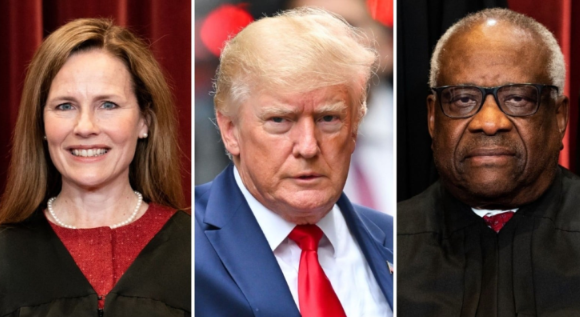
In a 6-3 decision, the Court upheld laws enacted in West Virginia and Idaho that base participation in female athletic competitions on biological sex. The ruling affirms that states may adopt such policies under the Equal Protection Clause and Title IX, concluding that they have the authority to regulate participation in school athletics.
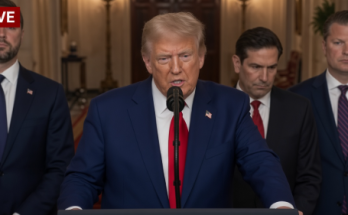
President Donald Trump welcomed the decision, calling it “a big win” in a post on Truth Social. He said the ruling supports policies intended to preserve fairness and safety in women’s sports.
Writing for the majority, Justice Brett Kavanaugh stated that biological differences between males and females—including average differences in strength, speed, endurance, height, and jumping ability—may affect athletic competition and participant safety. The Court concluded that these considerations provide a legal basis for states to establish eligibility standards for girls’ and women’s sports.
Several justices wrote separate opinions. Justice Sonia Sotomayor filed an opinion concurring in part and dissenting in part, while Justices Elena Kagan and Ketanji Brown Jackson also issued opinions agreeing with portions of the Court’s judgment while differing on aspects of the legal reasoning.
The lawsuits involved transgender athletes challenging the state laws. In Idaho, plaintiff Lindsay Hecox sought to compete on Boise State University’s women’s athletic teams. In West Virginia, the case centered on B.P.J., a transgender student who challenged restrictions on participation in school sports. The states were represented by the Alliance Defending Freedom, while the plaintiffs were represented by the American Civil Liberties Union and Cooley LLP.
The decision follows President Trump’s 2025 executive order directing federal agencies to enforce sex-based athletic participation policies, which prompted legal disputes with several states over education funding and civil rights enforcement.
Supporters of the ruling argue that it protects competitive fairness and safety in women’s athletics, while opponents contend it limits opportunities for transgender students and raises concerns about equal access. The decision leaves primary authority over school sports eligibility rules with individual states.