Federal Oversight and Financial Shifts: Trump Challenges D.C. Autonomy as RNC Claims Fundraising Dominance
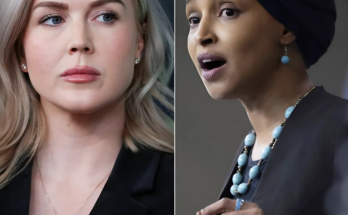
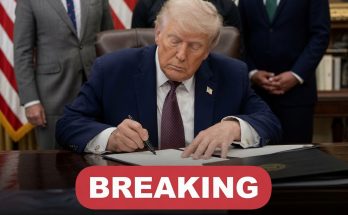
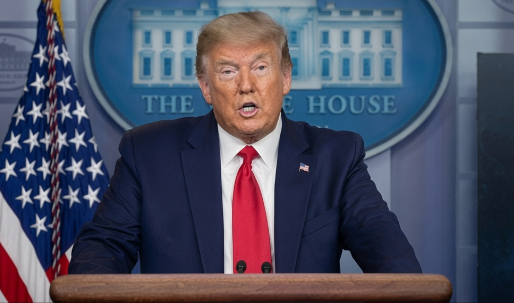
In a significant escalation of tension between the executive branch and local governance, President Donald Trump has signaled the possibility of the federal government assuming direct control over Washington, D.C. This warning is specifically tied to the potential electoral success of Janeese Lewis George, a prominent Democratic Socialist and current councilmember who is leading the race for the Democratic mayoral primary. Trump’s remarks, delivered from the Oval Office, suggest a fundamental challenge to the District of Columbia Home Rule Act, which grants the city’s residents the right to elect their own leaders while maintaining the ultimate authority of Congress. Trump argued that a victory for George would necessitate federal intervention to prevent the city from moving in what he deems the “wrong direction,” emphasizing that he would not tolerate the loss of local businesses to socialist policies.The political landscape in the nation’s capital is currently shaped by Janeese Lewis George’s campaign, which centers on housing affordability, expanded social programs, and significant public safety reforms. George, a member of the Democratic Socialists of America, currently holds a double-digit lead in polling ahead of the June 16 primary against Kenyan McDuffie. Her rise has been met with intense scrutiny, particularly regarding her opposition to youth curfews during periods of high-profile teen unrest.
For his part, President Trump maintains that the city has flourished under recent conditions, citing a reduction in crime and a thriving restaurant scene—achievements he believes could be jeopardized by a change in ideological leadership. George has responded by labeling these threats as a direct assault on local democracy.This is not the first time President Trump has moved to assert federal power over the District. Less than a year ago, the administration took the unprecedented step of invoking emergency powers to assume control of the Metropolitan Police Department. During that period, National Guard troops were deployed throughout the city, sparking a wave of backlash from local leaders and Congressional Democrats who viewed the move as an overreach. While direct police control was eventually returned to the city, the continued presence of federal personnel and Trump’s recent comments suggest that the administration is prepared to revisit these measures if the political trajectory of the capital continues to lean further left.Simultaneously, the broader national political battle is being shaped by a dramatic shift in campaign finance. Joe Gruters, Chairman of the Republican National Committee (RNC), has asserted that the Republican Party is poised to outspend Democrats in the current election cycle—a feat rarely achieved in recent history. Speaking on Breitbart, Gruters highlighted a massive disparity in cash on hand, noting that the RNC holds approximately $125 million while the Democratic National Committee (DNC) is reportedly facing negative reserves. Gruters predicts that the “collective” financial power of the right, including the National Republican Senatorial Committee and the House committee (each holding $80 million), could reach upwards of $800 million, far outstripping the $350 million projected for the left.A critical component of this financial strategy hinges on an upcoming court ruling regarding coordinated campaign limits. If the court rules in favor of allowing parties to spend at the more favorable “candidate rate,” the Republican Party’s financial advantage would be significantly magnified. This would allow for a level of coordination between the party and individual candidates that has previously been restricted by law. As the primary elections approach, the combination of potential federal intervention in local Washington, D.C. affairs and the GOP’s aggressive fundraising efforts marks a volatile new chapter in the struggle for political control in the United States.