Trump and Vance Assert Victory with Bold New Iran Memorandum of Understanding
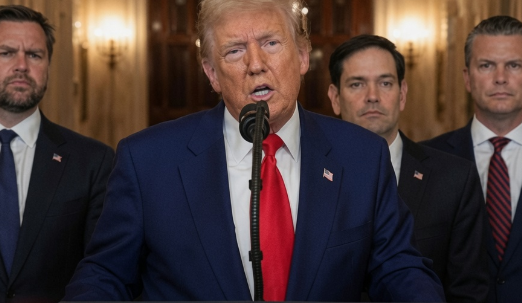
President Donald Trump has issued a defiant response to critics regarding the recently signed U.S.-Iran Memorandum of Understanding (MOU). Asserting that his administration has secured a historic peace deal, Trump dismissed those who have hyperbolized potential negatives while simultaneously rebuking previous calls for war. His message to detractors was simple and direct: “You’re welcome.” The President took to Truth Social to frame the agreement as a multi-front victory, claiming it simultaneously secures the global energy supply, bolsters national security, and drives the American economy to new heights. According to Trump, the deal ensures that Iran will never possess a nuclear weapon, a development he believes makes the entire world safer.Beyond security, Trump linked the diplomatic breakthrough to domestic prosperity. He pointed to the “roaring” stock markets, record-breaking job numbers, and dropping prices as evidence of his administration’s success. He emphasized that under this new framework, oil is flowing and the United States is “strong, safe, and respected like never before.” This bold rhetoric serves to counter both those who feared a renewed conflict and those who criticized the diplomatic outreach as a sign of weakness. By positioning the deal as a cornerstone of his economic policy, Trump is attempting to consolidate political capital while silencing opposition regarding his unconventional approach to Middle East diplomacy.Addressing financial concerns, the Trump administration and various officials have clarified that no frozen Iranian assets have been released as part of the initial signing. This is a critical point of contention, as critics often point to previous administrations’ dealings with Tehran involving the unfreezing of funds. The current administration maintains that no sanctions have been lifted and no direct payments have been authorized. Instead, any potential economic relief is strictly contingent upon Iran’s adherence to rigorous compliance requirements. This “compliance-first” approach ensures that the U.S. maintains maximum pressure while keeping the door open for diplomatic progress through strict nuclear program oversight.Vice President JD Vance played a pivotal role this week in defending the deal’s architecture and providing updates from the White House. During a press briefing, Vance discussed the significant leverage the United States holds over the Iranian leadership, both economically and militarily. While he acknowledged that it remains uncertain if Tehran will fundamentally change its behavior in the long term, he argued that the current deal is structured so that the U.S. wins regardless of the outcome. If Iran complies, the region stabilizes; if they do not, they receive none of the promised benefits. Vance urged skeptics to trust the judgment of Gulf Arab states, who have the most at stake in regional security and have been consulted throughout the negotiation process.Furthermore, Vance spent time debunking reports of a massive “reconstruction fund” for Iran worth hundreds of billions. He clarified that any future investment, potentially sourced from Gulf nations, would only occur if Tehran permanently abandons its nuclear ambitions, eliminates its enriched nuclear stockpiles, and submits to intrusive verification measures. The deal also carries significant implications for the Strait of Hormuz, a vital maritime chokepoint. By centering the negotiation on verifiable behavior, the Trump-Vance administration is betting that this high-stakes diplomacy will either force a transformation in Tehran or leave the adversary in an even more weakened, isolated state.