Justice at the Crossroads: The Moral and Legal Debate Over Juvenile Life Sentences
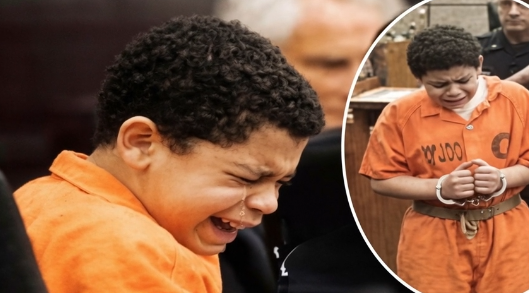
The American legal system is currently undergoing a period of intense national reflection regarding the imposition of life sentences on children, specifically those who committed crimes before the age of 14. This complex issue highlights a fundamental tension between the pursuit of accountability for serious offenses and the capacity for mercy. Behind the legal statistics are diverse and often tragic stories; while some cases involve extreme violence or homicide, others involve accomplice liability, where a minor was held legally responsible for a death they did not directly cause. Many of these young defendants come from backgrounds defined by poverty, instability, and trauma, factors that complicate the pursuit of justice.Advocates for reform frequently point to developmental science as a primary justification for change. Research confirms that the adolescent brain—particularly the regions responsible for impulse control, risk assessment, and long-term judgment—is not yet fully formed. Because youth is inherently characterized by immaturity, legal experts and scientists argue that it is difficult to determine whether a child’s actions at age 13 are indicative of a permanent character flaw or a temporary developmental stage. This raises the critical question of whether permanent punishment should be applied to a person whose capacity for change has not yet been established.The Supreme Court of the United States has addressed these concerns through landmark rulings over the last decade. In 2012, the Court determined that mandatory life without parole for juveniles is unconstitutional, followed by a 2016 ruling that made this decision retroactive. These legal milestones did not ban life sentences entirely but mandated individualized consideration. Judges are now required to evaluate the offender’s age, the specific circumstances of the crime, and the possibility of rehabilitation before delivering the harshest possible penalties. However, implementation remains inconsistent, with different jurisdictions and states adopting varying speeds and standards for reviewing these cases.The debate is further complicated by the needs of victims and the demand for public safety. Crimes that result in death leave families devastated, and many argue that justice requires a consequence that matches the severity of the harm. Nevertheless, civil rights groups argue that fairness must account for human development. They advocate for restorative justice and structured parole opportunities, suggesting that a decision made in childhood should not irrevocably define a person’s existence into their middle age and beyond.Ultimately, the discussion regarding juvenile life sentences serves as a deeper reflection on the moral foundations of society. It challenges the nation to choose between a system centered on retribution and one that allows for the possibility of redemption. By weighing the human weight of each case, the justice system must decide if it will permanently close doors on children or leave room for the transformation of those who commit grave wrongs at a young age.