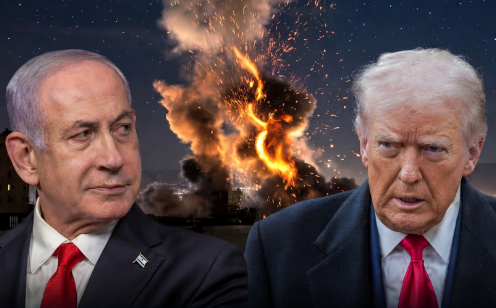
Rising hostilities between Iran and Israel have intensified concerns about the potential for a broader regional conflict, with recent military exchanges marking one of the most serious escalations in years.
According to reports, Iran has launched a series of missile strikes targeting areas in and around Tel Aviv, describing the operation as retaliation for the killing of a senior security official. The attacks have drawn significant international attention due to allegations that some missiles carried cluster-type warheads, weapons that disperse multiple submunitions over a wide area. Such munitions have long been controversial because of the risks they pose to civilians and the possibility that unexploded bomblets may remain hazardous long after a conflict ends.
The confrontation has expanded beyond the immediate Israel-Iran theater. In recent months, Iranian forces and allied groups have reportedly carried out attacks against military facilities and strategic sites across the Gulf region, including locations in Kuwait, Bahrain, the United Arab Emirates, and Saudi Arabia. These developments have increased concerns about regional instability and raised the prospect of a wider conflict involving multiple countries and armed groups.
The United States has become more deeply engaged as tensions have risen, supporting Israel while participating in operations aimed at degrading Iranian military capabilities. Analysts note that the growing scale and complexity of military activity have heightened fears of further escalation if diplomatic efforts fail to gain traction.
Despite the intensity of the attacks, Israel’s advanced missile defense network has reportedly intercepted a significant portion of incoming threats. However, defense experts caution that sustained barrages can place considerable strain on even sophisticated interception systems, particularly when attacks involve large numbers of missiles or advanced delivery methods.
Beyond the military dimension, the conflict is affecting global markets. Concerns over potential disruptions to energy production and shipping routes, particularly through the strategically important Strait of Hormuz, have contributed to market uncertainty and fluctuations in oil prices.
As diplomatic efforts continue, international leaders are urging restraint and renewed dialogue. Many observers warn that without meaningful de-escalation, the crisis could evolve into a larger regional confrontation with significant humanitarian, economic, and geopolitical consequences.