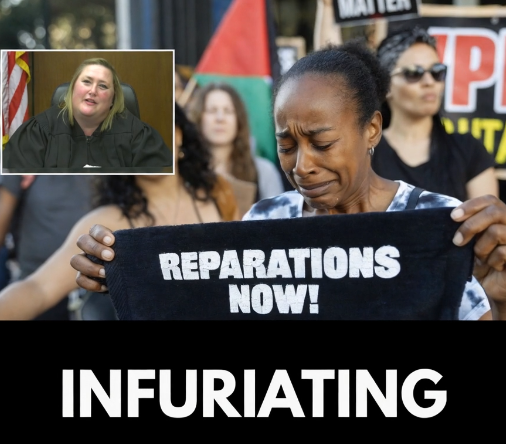
San Francisco Reparations Fund Lawsuit Faces Setback as Judge Rules Challenge Is Premature
A legal challenge to San Francisco’s proposed race-based reparations fund has encountered an early setback after a California judge ruled that the lawsuit was filed prematurely, allowing the plaintiffs an opportunity to revise their claims but declining to move the case forward in its current form.
Judge Joseph Quinn of the San Francisco Superior Court sustained a demurrer against the lawsuit, concluding that the plaintiffs had not presented sufficient grounds at this stage to support their legal challenge. A demurrer is a procedural objection arguing that a complaint fails to state a legally valid claim, even if the facts alleged are assumed to be true.
While the ruling temporarily favors the city, it does not end the dispute. Quinn granted the plaintiffs leave to amend their complaint, giving them an opportunity to address deficiencies identified by the court or pursue an appeal.
The lawsuit was filed by the Pacific Legal Foundation, several San Francisco residents, and the Californians for Equal Rights Foundation. The plaintiffs argue that the city’s ordinance establishing a reparations fund for Black residents violates constitutional protections by creating a government program that they contend discriminates on the basis of race.
According to the complaint, the ordinance creates a framework for administering a reparations fund that could ultimately benefit individuals based on racial criteria. The plaintiffs maintain that government entities are prohibited under both federal and California law from allocating benefits, opportunities, or burdens according to race or ancestry.
In a statement following the ruling, a spokesperson for the Pacific Legal Foundation expressed disappointment but emphasized that the organization intends to continue its legal challenge.
“We are disappointed by the Superior Court’s ruling, but remain undeterred,” the spokesperson said. “The government cannot use taxpayer money to administer funds for programs that discriminate based on race. The next step will be to either amend the complaint or appeal.”
The plaintiffs argue that a successful challenge would not only prevent taxpayer resources from supporting what they describe as a race-based government program but could also establish legal limits on similar initiatives in other jurisdictions.
During court proceedings, Judge Quinn questioned whether the plaintiffs had demonstrated that the ordinance itself resulted in unlawful racial discrimination. According to reports from the hearing, Quinn indicated that the current record lacked sufficient evidence to determine how the fund would ultimately operate or whether its implementation would violate constitutional protections.
The discussion reportedly focused heavily on the issue of taxpayer standing—the legal principle that determines whether taxpayers have the right to challenge government actions in court.
Andrew Quinio, an attorney representing the Pacific Legal Foundation, argued that assigning a publicly funded agency to administer a reparations fund constituted sufficient grounds for a taxpayer challenge. He maintained that the ordinance established a framework for a potentially unlawful purpose and therefore warranted judicial review.
Judge Quinn, however, pushed back on that argument. He questioned whether the mere possibility that a race-conscious action could occur under the ordinance was enough to support a legal claim.
According to reports from the hearing, Quinn expressed concern that accepting such a standard could open the door to countless lawsuits challenging laws based solely on hypothetical future applications. He suggested that courts require more concrete evidence demonstrating that a law necessarily results in unlawful conduct before allowing such claims to proceed.
Quinn reportedly noted that if a law can be implemented in a lawful manner, plaintiffs generally face a higher burden when attempting to challenge it before any action has occurred. In this case, he indicated that the plaintiffs had not yet demonstrated that the ordinance was unconstitutional in every potential application.
The judge’s ruling does not address the ultimate legality of reparations payments or whether future implementation of the program could face constitutional scrutiny. Instead, it focuses on whether the current challenge is ripe for judicial review given the ordinance’s preliminary nature.
The reparations initiative itself remains largely conceptual. In December, San Francisco Mayor Daniel Lurie signed legislation establishing the framework for a reparations fund following approval by the city’s Board of Supervisors.
The ordinance authorizes the creation and administration of the fund but does not allocate money, guarantee payments, or establish a final compensation structure. While discussions surrounding reparations in San Francisco have included proposals that could provide substantial financial compensation to eligible Black residents, those proposals have not been formally funded or implemented.
Under the ordinance, the fund may receive financial support from private donors, charitable foundations, and other non-city sources. Any future use of taxpayer funds would require additional legislative action, an identified funding source, and approval from the mayor.
Supporters of reparations efforts argue that such programs are intended to address the long-term effects of historical discrimination, exclusionary housing policies, and economic disparities experienced by Black communities. Opponents, however, contend that race-based government benefits raise serious constitutional concerns and may conflict with equal protection principles.
The legal dispute unfolding in San Francisco reflects a broader national debate over reparations policies and the extent to which governments may consider race when designing programs intended to address historical inequities.
For now, the city’s ordinance remains in place, while the plaintiffs consider their next legal steps. Whether through an amended complaint or an appeal, the case appears likely to continue, potentially setting the stage for further judicial examination of reparations initiatives and their constitutional implications.
As the debate moves forward, both supporters and critics will be watching closely to see how courts address one of the most contentious public policy issues in the country. The outcome could have implications not only for San Francisco but also for other cities and governments exploring similar reparations programs.