WASHINGTON — President Donald Trump’s comments during a live CNN interview Sunday have sparked renewed debate over the relationship between the White House and the news media after the president said his administration was working to move the network toward what he described as a “normal path.”
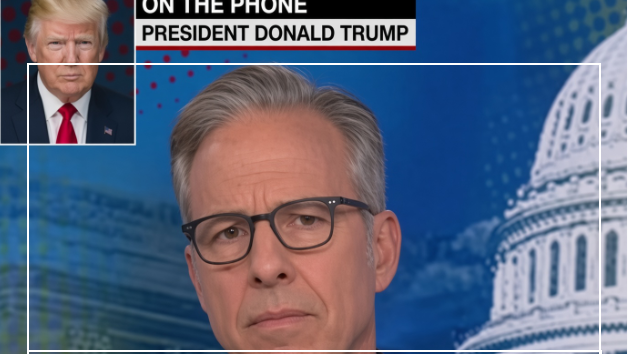
Trump made the remarks during a phone interview with CNN anchor Jake Tapper, who had invited the president to discuss the death of Sen. Lindsey Graham. During the conversation, Trump declined to address other subjects, including questions related to recent U.S. military operations involving Iran.
“We’re trying to have CNN go on a normal path, and we’ll do that,” Trump said.
The comment quickly drew attention because of its suggestion that the administration was seeking to influence the direction of a major American news organization. The precise meaning of Trump’s statement was not immediately clear, and the White House did not provide additional details about what actions the administration may be taking to influence CNN.
Tapper responded by thanking the president for participating in the interview.
“Well, I’m on a normal path right here, sir, and I appreciate your time,” Tapper said before ending the conversation.
The exchange generated a wave of reaction online, with critics accusing Tapper of failing to challenge Trump’s remarks and raising broader concerns about journalistic independence. Some commentators argued that a news organization should determine its editorial direction independently of any administration, while others viewed the exchange as evidence of the increasingly contentious relationship between Trump and major media outlets.
The controversy also comes amid heightened scrutiny surrounding CNN’s corporate ownership. Warner Bros. Discovery, the parent company of CNN, has been involved in major corporate developments, including the proposed acquisition by Paramount Skydance. The transaction has attracted political and regulatory attention, adding another layer to discussions about the relationship between media companies and government officials.
The broader debate centers on a fundamental principle of American journalism: whether news organizations should operate independently from political pressure regardless of which party controls the White House.
Tapper has previously addressed that principle publicly. In earlier remarks, he emphasized that CNN’s responsibility was not to please a president or restrict its reporting to statements favored by the administration.
Trump, meanwhile, has frequently criticized CNN and other mainstream media organizations, accusing them of unfair coverage while arguing that the news industry needs significant changes.
Supporters of the president contend that his criticism and calls for changes in media coverage represent political speech protected by the First Amendment rather than an attempt to control journalism. Critics counter that presidential influence carries particular weight because of the power and visibility of the office.
The latest exchange therefore extends a long-running dispute over the boundaries between political leadership, media criticism and press independence.
For now, it remains unclear what Trump meant by putting CNN on a “normal path” or what specific steps, if any, the administration is taking toward that goal. The remarks nevertheless have reignited concerns about the relationship between government power and independent journalism at a time when public trust in the media remains deeply divided.
The episode underscores the continuing tension between a president who openly challenges major news organizations and a press corps that maintains its responsibility to report independently, regardless of political pressure.