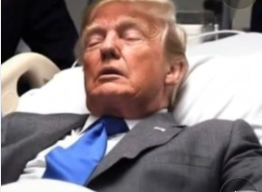
In recent days, a wave of unsubstantiated and sensationalist claims has surged across the digital landscape, falsely asserting that Donald Trump was “shot again” in Washington D.C. or at the White House. As a professional journalistic review of the current media environment clarifies, there is absolutely no credible evidence or official reporting to support these allegations. Major global news organizations, including the Associated Press (AP), Reuters, the BBC, and The New York Times, have issued no such reports. The viral spread of these claims appears to be a calculated maneuver by bad actors and sensationalist content creators on platforms like YouTube, TikTok, and X to harvest views and engagement through fear-based misinformation.
To understand the current confusion, one must look at the only verified assassination attempt involving the former president in recent history. On July 13, 2024, during a campaign rally in Butler, Pennsylvania, a gunman positioned on a nearby rooftop fired several rounds using an AR-style rifle. This event was a significant security failure that resulted in Donald Trump being grazed in the right ear. While the incident was chaotic and tragic—leading to the death of a rally attendee and injuries to others—the United States Secret Service neutralized the shooter immediately. Trump was treated at a medical facility and released shortly after. This Pennsylvania incident remains the sole confirmed shooting involving him, yet it is frequently recycled in misleading videos to suggest a new, “minutes ago” occurrence.
Confusion has been further exacerbated by a secondary security incident that took place in September 2024. During this event, gunshots were reported in the vicinity of one of Donald Trump‘s golf clubs in Florida. While the Secret Service responded with immediate force to a potential threat, and the situation was undoubtedly serious, it is crucial to note that no injuries were reported, and Trump himself was not harmed. However, purveyors of online misinformation often conflate this Florida security scare with the earlier Pennsylvania shooting or invent entirely new scenarios in Washington D.C. to create a false narrative of continuous physical attacks.
The mechanism behind the rapid spread of this misinformation is rooted in the algorithmic nature of social media. Platforms like Facebook and YouTube prioritize high-engagement content, and titles that use dramatic phrases such as “Shock in D.C.” or “Shot AGAIN” are designed to trigger emotional responses like shock and outrage. These emotional triggers bypass the critical thinking of many users, leading to the rapid sharing of unverified videos. These videos often feature recycled footage from the Butler rally or unrelated stock imagery, presented under the guise of “Breaking News.” Without corroboration from trusted sources like PBS, CBS, or The Washington Post, these headlines remain nothing more than digital fabrications.
Furthermore, recent legitimate news coverage has highlighted events that are being intentionally twisted by misinformation agents. For instance, there were reports of a shooting near the White House involving National Guard members, one of whom tragically passed away. While Donald Trump may have commented on the matter publicly, he was in no way a victim or a participant in that specific incident. Similarly, news regarding his involvement in international diplomacy—specifically discussions concerning ceasefire negotiations in Thailand and Cambodia—is frequently buried under the noise of viral hoaxes. These diplomatic efforts represent the actual verified activities of the former president, standing in stark contrast to the violent fabrications circulating on the internet.
In an era defined by the instantaneous flow of information, the responsibility of the reader has never been greater. Distinguishing between fact and fiction requires a reliance on established editorial standards. If an event as monumental as a shooting of a U.S. political figure were to occur, it would result in a simultaneous, massive reporting effort by every major news desk in the world, accompanied by official statements from the White House and federal law enforcement. The absence of such reporting is a definitive indicator that a claim is bogus. To remain accurately informed, one must look past the “clickbait” titles and seek the rigorous verification processes provided by professional journalists. Accuracy in the digital age is not just about staying updated; it is about knowing which sources have earned the public’s trust through a commitment to the truth.