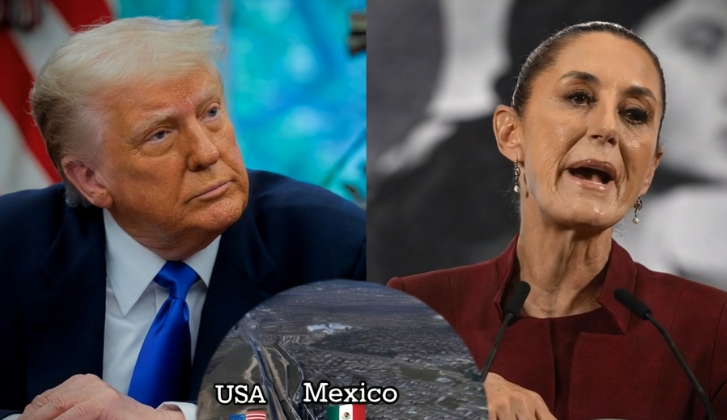
President Claudia Sheinbaum of Mexico has sparked a significant cross-border debate following her recent, measured comments regarding former U.S. President Donald Trump. Deviating from the typically sharp and hostile political rhetoric, Sheinbaum adopted a strategic and restrained tone, emphasizing that her disagreements with Trump are strictly rooted in policy rather than personal animosity. By refusing to label him as an enemy of Mexico, she sought to de-escalate tensions and pivot the national conversation toward diplomacy and the underlying complexities of U.S.-Mexico relations.
Addressing Trump‘s past rhetoric on immigration and border security, Sheinbaum noted that while his words caused concern, political leaders should be judged by their negotiations and tangible outcomes rather than campaign narratives. This stance has polarized observers: supporters of Trump view it as validation that he is often mischaracterized, while critics argue the Mexican president is softening her stance too much. This internal division highlights the ongoing influence Trump exerts on international political discourse, even outside the United States.
Analysts suggest this move is a calculated effort to ensure strategic diplomacy and pragmatic cooperation, regardless of the shifting political landscape in Washington. By prioritizing strategy over emotional outrage, Sheinbaum is positioning Mexico to protect its trade and border security interests. Ultimately, the incident underscores how Donald Trump remains a central figure in global affairs, capable of igniting a political storm even through the measured and careful words of foreign heads of state.