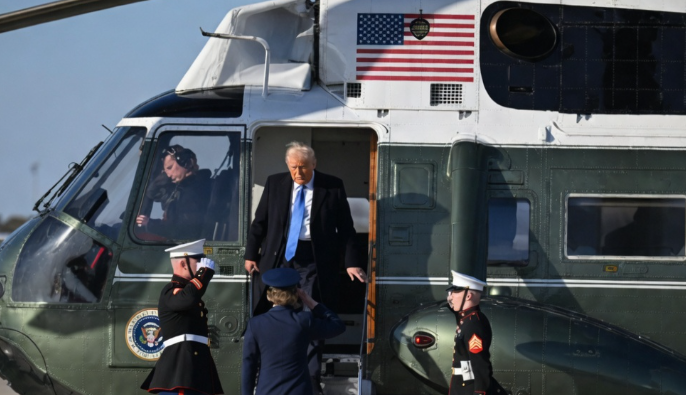
President Donald Trump has redirected a high-level Cabinet meeting to the White House, moving away from original plans to convene at Camp David. This shift occurs as the administration claims to be nearing a “phase one” agreement intended to end the long-standing hostilities with Iran. In recent statements, Donald Trump characterized the Iranian regime as “negotiating on fumes,” suggesting that internal pressures have left them desperate for a resolution. Despite his confidence, the President noted that a satisfactory agreement has not yet been reached, warning that the U.S. remains prepared to “finish the job” militarily, citing the significant degradation of the Iranian navy and air force.
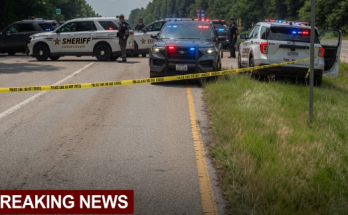
The backdrop for these negotiations is marked by direct military confrontation. CENTCOM recently reported carrying out “self-defense strikes” in southern Iran. These operations were specifically aimed at missile launch sites and vessels allegedly involved in laying mines within the Strait of Hormuz. Former CENTCOM Commander Gen. Joseph Votel interpreted these Iranian provocations as a strategy to “hedge their bets” and increase leverage during diplomatic talks. Joseph Votel praised the American military’s swift response on Fox News, describing it as an effective use of force that underscores the dual-track approach of military readiness and diplomatic engagement required to handle the crisis.
Adding a layer of complexity to the talks is the status of Mojtaba Khamenei. Counterterrorism experts, including Dr. Omar Mohammed, have pointed out the unprecedented nature of negotiating with a leader designated as a target who must operate through secret courier networks. Dr. Omar Mohammed explained that because Mojtaba Khamenei remains in hiding, any memorandum of understanding would essentially be signed with an “invisible counterparty.” This structure challenges conventional arms control frameworks, as the enforcement of any deal would be intrinsically tied to the survival and shadow-rule of a designated target under intense American military pressure.
Economically, the stakes are equally high. Iran is reportedly seeking the release of approximately $24 billion in frozen assets as a condition of the deal. Reports from Tasnim News, which is linked to the IRGC (Islamic Revolutionary Guard Corps), indicate that Tehran expects an immediate release of $12 billion upon the declaration of a memorandum, with the remainder to follow a 60-day discussion period. This financial demand comes at a time when global energy markets are closely watching the Strait of Hormuz. NYMEX data showed oil prices hovering near $93.57 per barrel, reflecting a slight decline as investors weigh the risks of regional instability against the potential for a breakthrough.
Market analysts David Asman and Lauren Simonetti have observed that investors seem to be betting on a de-escalation of tensions. Despite the recent strikes and heated rhetoric, the prevailing sentiment on Wall Street suggests that the Strait of Hormuz will remain open and that oil prices may eventually stabilize. David Asman noted that the stock market is looking past the current friction, anticipating that the crisis will mitigate once a formal agreement is reached, even as domestic consumers continue to face the pressures of inflation and rising interest rates.