The recent state visit of King Charles III and Queen Camilla to the United States was designed as a pivotal effort to reinforce the “special relationship” between the two nations. Hosted by Donald Trump at the White House, the four-day diplomatic tour featured prestigious honors, including a full military review on the South Lawn involving the Marine Corps and the Space Force Honor Guard. During a significant address to Congress, King Charles underscored the historical depth of the trans-Atlantic bond, emphasizing the urgent need for continued cooperation in a complex global landscape.
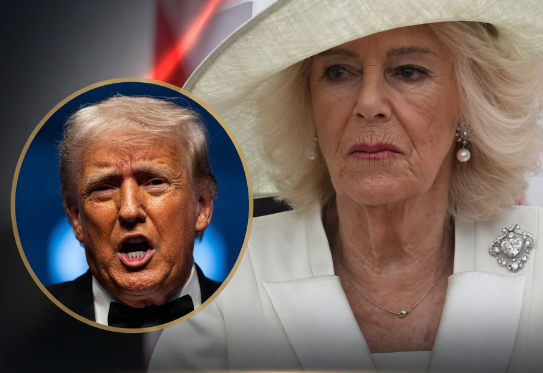
Despite the gravity of the diplomatic agenda, public attention was quickly diverted by a brief interaction during the formal greeting ceremony. As Queen Camilla moved to shake hands with a line of invited guests, Donald Trump appeared to step in front of her, momentarily obstructing her progress and disrupting the established sequence of royal etiquette. This breach of protocol, captured on film and widely circulated across social media, ignited a polarized debate. Critics labeled the action as a sign of discourtesy or a lack of awareness regarding traditional customs, which usually dictate that the visiting monarch takes precedence in such formal exchanges.Conversely, some observers offered a more tempered view, noting that the logistical complexities of high-profile diplomatic events often lead to minor overlaps in movement. This is not the first time Trump‘s interactions with the Royal Family have drawn scrutiny, as past visits also featured moments that diverged from strict monarchical protocol. Nevertheless, the state visit concluded with a focus on shared strategic interests and historical unity. The incident serves as a modern reminder that in the age of digital media, the visual performance of diplomacy—and the public’s perception of etiquette—carries as much weight as the policy discussions occurring behind closed doors.