The conflict involving the United States, Israel, and Iran has quickly become one of the most serious geopolitical crises in recent years. What began as a series of coordinated military operations has rapidly evolved into a broader regional confrontation drawing worldwide attention. In late February 2026, the United States and Israel launched a large-scale military campaign targeting several strategic sites inside Iran. Officials described the strikes as precise operations aimed at military infrastructure and command networks connected to Iran’s security apparatus.
During the opening phase of the campaign on February 28, Iranian state media and several international outlets reported that Iran’s Supreme Leader, Ayatollah Ali Khamenei, had been killed during the attacks. The report sent shockwaves throughout the Middle East and across the international community. Khamenei had served as Iran’s highest authority for decades and played a central role in shaping the country’s political and military direction. Following the strikes, Iranian leaders declared a national mourning period and warned that retaliation against American and allied targets would follow. In the days that followed, Iran launched missile and drone attacks targeting locations believed to host American or allied forces across the Persian Gulf region. Countries including Israel, Bahrain, Kuwait, Qatar, Jordan, and the United Arab Emirates placed their defense systems on high alert.
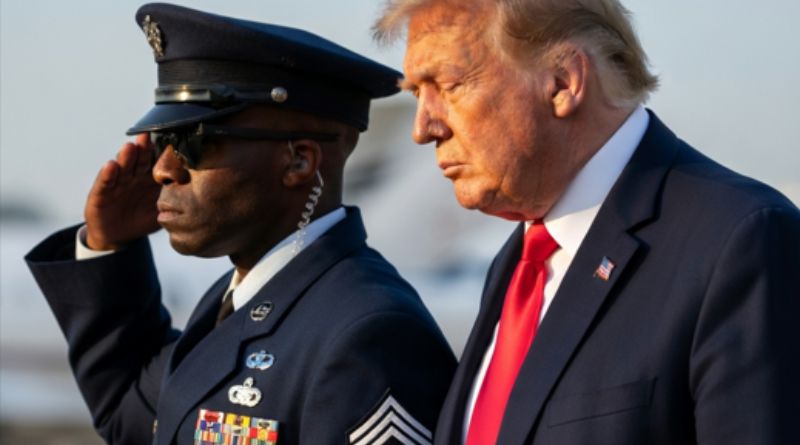
One of the most tragic incidents occurred on March 1, 2026, when an Iranian one-way drone struck a tactical operations center near Port Shuaiba in Kuwait. The facility served as a backup logistics hub supporting U.S. military operations. The strike caused severe damage to the building and killed six U.S. Army service members stationed inside. The soldiers—Major Jeffrey R. O’Brien, Captain Cody A. Khork, Chief Warrant Officer 3 Robert M. Marzan, Sergeant First Class Nicole M. Amor, Sergeant First Class Noah L. Tietjens, and Sergeant Declan J. Coady—were part of a logistics unit connected to the U.S. Army Reserve’s 103rd Sustainment Command. Their remains were returned to the United States on March 7 during a dignified transfer ceremony at Dover Air Force Base. President Donald Trump attended the ceremony and met privately with the families of the fallen service members, honoring their sacrifice. As military operations continue and tensions remain high, governments around the world are closely monitoring the situation, aware that the conflict could have far-reaching consequences for regional and global security.