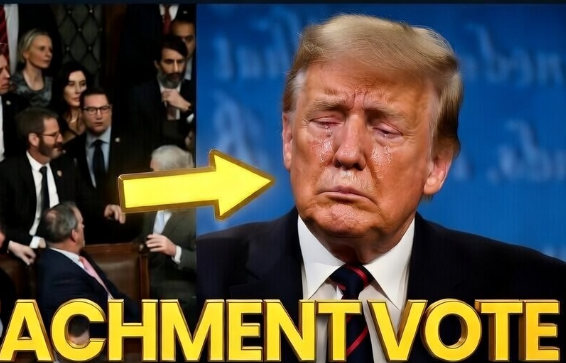
U.S. Representative John Larson has formally introduced articles of impeachment against President Donald Trump, marking a significant escalation in the ongoing debate over executive authority.
The resolution, filed on April 6 and referred to the House Judiciary Committee, levels severe accusations against the President, including war crimes, murder, and piracy. Larson contends that the President has systematically usurped the war-making powers constitutionally reserved for Congress under Article I, specifically citing recent military actions and provocative rhetoric directed at Iran. The core of the impeachment effort focuses on the administration’s handling of the Iran crisis. Larson highlighted specific social media threats of total destruction as evidence of an unstable and dangerous foreign policy approach. Despite the gravity of these claims, the measure faces a steep uphill battle in a Republican-controlled House, where leadership is unlikely to permit the resolution to advance. White House spokesperson Davis Ingle has already dismissed the move as a “pathetic” political maneuver, echoing sentiments that Democrats have been seeking removal since the start of the President’s term. Beyond impeachment, some lawmakers are exploring alternative methods of removal, such as the invocation of the 25th Amendment. This path has gained vocal support from U.S. Senator Chris Murphy, alongside Representatives Al Green and Shri Thanedar. However, political analyst Scott McLean suggests these efforts are largely driven by the demands of the party’s base rather than a clear legislative path, noting that any conviction would require a two-thirds majority in the Senate—a feat Trump has avoided in two previous trials. Locally, the move reflects internal Democratic dynamics as Larson faces a primary challenge from former Hartford Mayor Luke Bronin. Both Bronin and local figures like Ruth Fortune of the Hartford Board of Education have endorsed the measure, describing the President as a threat to the nation. While the resolution currently sits in committee without a clear path forward, it underscores a deepening national divide over the limits of presidential power.