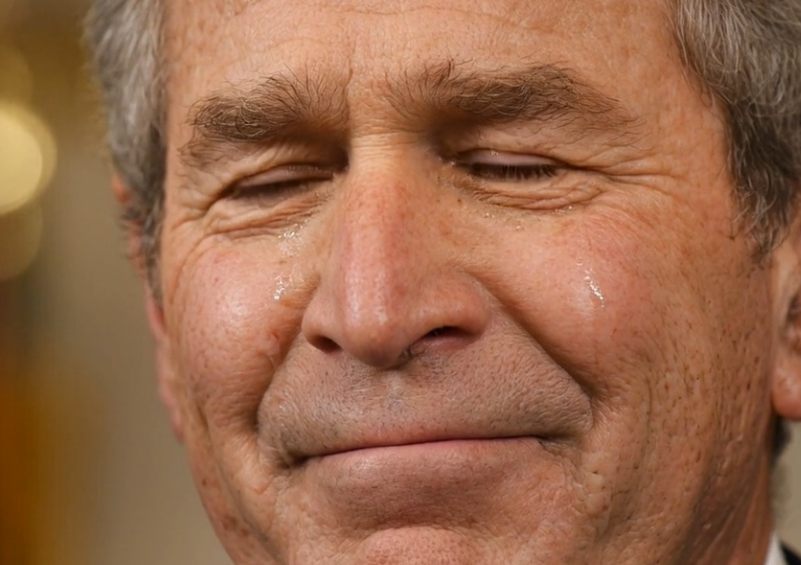
When George W. Bush took the mound for the World Series opener, the public witnessed what appeared to be a clumsy execution of a familiar American ritual. As the ball bounced before reaching home plate, social media was quick to offer mockery, viewing the pitch as a sign of fading athleticism or poor coordination. However, a closer look at the former president’s stiffness of stride and guarded shoulder movements revealed a far deeper story. These were subtle indicators of a man testing the extreme limits of a surgically repaired back, following a major medical intervention that the general public was largely unaware of at the time.
Months before his appearance, George W. Bush had undergone a rigorous lower spine fusion. This invasive procedure involved the installation of screws and rods, a hardware setup that fundamentally alters a patient’s range of motion and physical function. The reality of his struggle was later brought to light by his daughter, Jenna Bush Hager, who defended her father’s performance. She highlighted the immense physical courage required for him to step into the global spotlight while still in the midst of a traumatic and painful recovery period. A spokesperson for the former president corroborated this narrative, emphasizing George W. Bush’s stoic nature and his characteristic refusal to complain about chronic discomfort. Rather than a failed athletic feat, the moment is better understood as a display of unyielding will and resilience. It serves as a poignant example of personal endurance, revealing the hidden physical costs of public duty and the strength of character that often remains unnoticed by the casual observer.