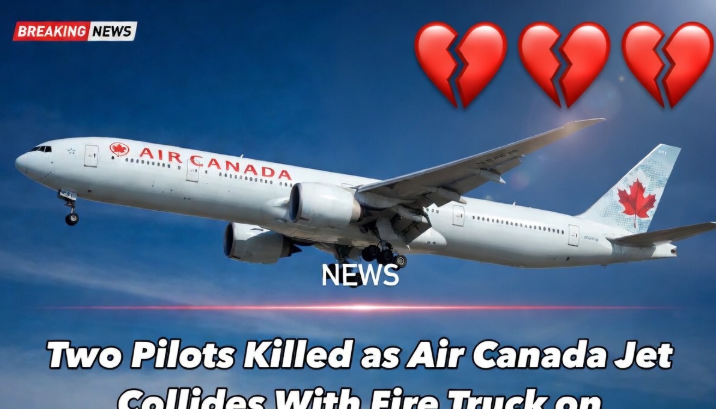
A catastrophic incident unfolded late Sunday night at New York’s LaGuardia Airport when an Air Canada Express Flight 8646 jet collided with a Port Authority fire truck on Runway 4. The Bombardier CRJ-900, operated by Jazz Aviation, was decelerating after a flight from Montreal when it struck the heavy emergency vehicle, known as Truck 1. The impact was devastating, crushing the aircraft’s cockpit and nose, resulting in the immediate deaths of both pilots. Of the 72 passengers and four crew members on board, 41 were injured, with nine remaining in serious condition. Two Port Authority officers in the fire truck also suffered significant injuries.
Preliminary investigations by the National Transportation Safety Board (NTSB) suggest a critical communication failure within the tower. Air Traffic Control audio reveals a controller cleared the fire truck—which was responding to a separate emergency involving an unidentified odor—to cross the active runway, only to realize the error and shout for a stop seconds before the impact. The NTSB is currently evaluating if external factors like heavy rain, visibility issues, or staffing shortages due to federal funding lapses contributed to the fatal error. The disaster has reignited a fierce national debate regarding U.S. aviation safety. Industry analysts are drawing haunting parallels to the November 2025 UPS crash in Louisville, pointing toward a systemic crisis involving air traffic control fatigue and diminished federal oversight. Critics argue that these recurring “close calls” and tragedies signal a dangerous margin of error that remains unaddressed by current safety legislation. As the NTSB “Go Team” processes the wreckage, LaGuardia Airport remains under a ground stop, leaving one of the nation’s busiest travel hubs paralyzed.