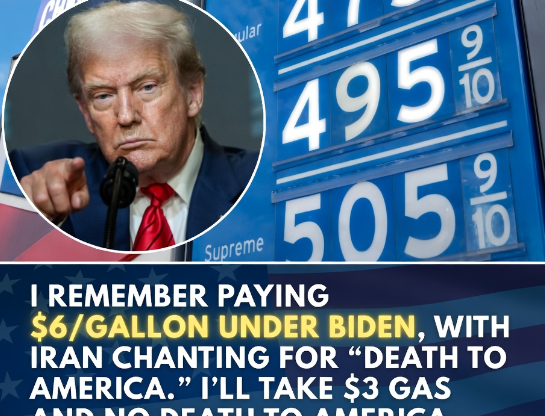
The discourse surrounding gasoline prices in the United States has evolved into a central pillar of national political debate, often utilized to draw direct comparisons between the leadership of Joe Biden and Donald Trump. Critics and supporters alike use these price fluctuations to validate broader political narratives; however, energy economists suggest that the drivers behind the cost at the pump are far more intricate than any single-administration policy.
Public perception often pins the responsibility for energy costs on the sitting president, but the underlying reality involves a multi-faceted web of global market dynamics. During cycles of significant price hikes—where costs in certain regions have reached or exceeded the $6 per gallon mark—the primary catalysts have been global economic uncertainty, supply chain disruptions, and escalating geopolitical tensions. Key factors such as refining capacity constraints and shifts in the global oil supply play a much larger role in determining retail prices than domestic political rhetoric often acknowledges. International conflicts, particularly those involving major energy-producing nations, further exacerbate these market pressures, leading to the economic volatility experienced by American consumers and businesses alike. On the other hand, periods of relative affordability are typically linked to favorable market conditions, including increased domestic production and shifts in consumer demand. Experts argue that while policy changes regarding energy distribution and land use matter, they are just one part of a broader, complex ecosystem. Ultimately, achieving long-term price stability requires a focus on infrastructure development, market transparency, and international cooperation. Experts urge the public to adopt a more nuanced perspective on energy economics, recognizing that fuel prices are influenced by a global web of factors that transcend the boundaries of short-term political framing and election cycles.