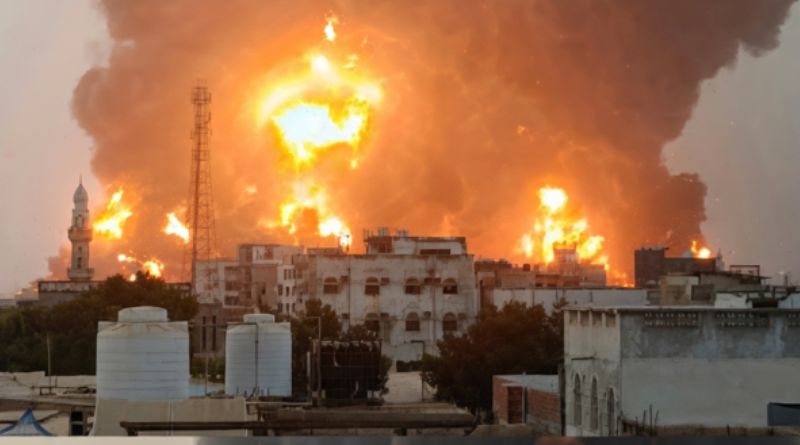
An Israeli airstrike on Yemen’s Houthi-controlled port of Hodeida has caused damage estimated at more than $20 million, according to a senior port official, with additional losses linked to the destruction of critical fuel storage facilities. The strike took place on July 20 and targeted Hodeida, the main port under the control of the Iran-backed Houthi movement. The attack came in direct response to a drone strike launched by the Houthis a day earlier, on July 19, which struck Tel Aviv and killed an Israeli civilian. In retaliation, Israel carried out what it described as a large-scale and precise military operation.
Houthi authorities reported that at least nine people were killed in the airstrike, which marked the first time Israel publicly acknowledged carrying out a direct attack inside Yemen. According to Israeli officials, dozens of aircraft participated in the mission, focusing on strategic infrastructure within the port. Targets included fuel storage sites, energy facilities, and four major container cranes. Israel stated that these facilities were being used, in part, to facilitate the transfer of Iranian weapons to Houthi forces, making them legitimate military objectives.
Nasr al-Nusairi, vice president of the Yemen Red Sea Ports Corporation, provided details from a preliminary damage assessment. He confirmed that two cranes were completely destroyed, while others were damaged. A small vessel was burned, several buildings were heavily impacted, and sections of the docks also sustained damage. He estimated that the cost of port-related damage alone exceeds $20 million, noting that this figure does not include the extensive losses from destroyed fuel infrastructure. The strike ignited massive fires that burned for several days, significantly reducing the port’s oil storage capacity. Despite the scale of destruction, operations at Hodeida resumed relatively quickly. Houthi officials said container ships began arriving within three days, and activity has since partially recovered. Israel described the strike as a major blow to the Houthis’ economic and logistical capabilities, particularly their ability to import weapons, amid ongoing regional tensions tied to the Gaza conflict.