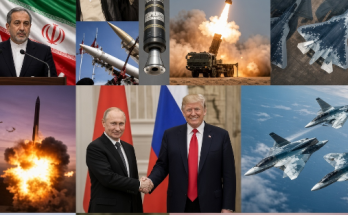
WASHINGTON — Senior officials across the Trump administration are engaged in high-stakes negotiations to broker a comprehensive agreement ending the military conflict with Iran, balancing delicate diplomatic talks in Doha with an aggressive naval blockade across the Persian Gulf.
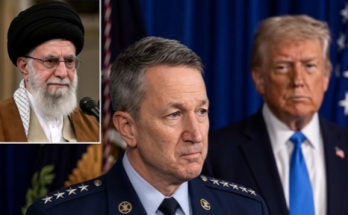
President Donald Trump, Vice President JD Vance, and Secretary of State Marco Rubio have been hammering out the framework of a settlement designed to curtail Tehran’s nuclear ambitions and permanently restore commercial navigation through the Strait of Hormuz. Yet even as negotiators trade draft language in Qatar, the situation remains precarious, highlighted by renewed skirmishes between American carrier battle groups and Iranian coastal defense systems.
Speaking to reporters during an official diplomatic mission to India, Rubio issued an unyielding ultimatum regarding the vital shipping corridor, warning that the waterway will be reopened regardless of Tehran’s posture.
“The straits have to be open, they’re going to be open,” Rubio said. “What’s happening there is unlawful, it’s illegal, it’s unsustainable for the world, it’s unacceptable.”
Addressing the diplomatic channel currently hosted by Qatari mediators, Rubio confirmed that indirect communications remain active but cautioned that finalizing terms will require intense drafting sessions.
“There were some talks going on in Qatar today, so we’ll see if we can make progress,” Rubio said. “I think it’s a lot of talking back and forth going on about specific language in the initial document, so it’ll take a few days. The president expressed his desire to make it. He’s either going to make a good deal or no deal.”
Naval Blockades and Surface-to-Air Clashes
While diplomats exchange proposals in Doha, military posture in the surrounding waters remains locked on a combat footing.
According to a senior U.S. defense official, nearly two dozen American warships—spearheaded by two aircraft carrier strike groups and their guided-missile escorts—alongside dozens of frontline combat aircraft, continue to enforce a maritime interdiction blockade. The cordon is aimed at cutting off maritime traffic into and out of Iranian ports across the Gulf of Oman and the Arabian Sea.
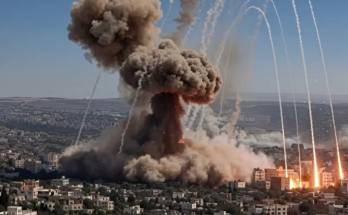
The friction turned kinetic on Monday when Iranian surface-to-air missile batteries targeted American strike aircraft and naval assets operating near the perimeter of the blockade zone. U.S. forces responded with precision strikes to neutralize the launching positions and degrade regional radar nodes.
The exchange marks the latest breach of an uneasy, six-week-old cessation of hostilities. While both capitals agreed to a tentative pause in wide-scale aerial bombings to facilitate talks, sporadic tactical engagements in international airspace and coastal sea lanes have threatened to upend the diplomatic track before formal terms can be initialed.
Tehran Acknowledges Progress but Urges Caution
In Tehran, Iranian officials offered a measured assessment of the negotiations, confirming substantial alignment on core concepts while cautioning against expectations of an immediate breakthrough.
During a weekly press briefing in the capital, Iranian Foreign Ministry spokesman Esmaeil Baqaei acknowledged that envoys have resolved many of the technical disputes under discussion, but blamed Washington for introducing shifting parameters late in the process.
“It is correct to say that we have reached a conclusion on a large portion of the issues under discussion,” Baqaei said. “But to say that this means the signing of an agreement is imminent—no one can make such a claim.”
Iranian negotiators are reportedly pushing for immediate sanctions relief and binding security guarantees before committing to structural rollbacks of their sovereign industrial programs. Tehran has expressed frustration with what it describes as shifting American demands regarding oversight mechanisms and the timeline for unfreezing seized overseas assets.
The Contours of a Proposed Settlement
Sources familiar with the discussions indicate that the proposed accord hinges on a quid pro quo centered on maritime freedom and nuclear containment:
-
Maritime De-escalation: Iran would formally dismantle its defensive mines, withdraw fast-attack missile boats, and guarantee unobstructed commercial transit through the Strait of Hormuz. In return, the United States Navy would terminate its naval interdiction blockade across the Gulf of Oman and permit unimpeded commercial shipping into Iranian commercial terminals.
-
Nuclear Thresholds: Tehran would be required to significantly roll back its enriched uranium stockpiles and cap enrichment activities well below weapons-grade thresholds, opening sensitive research installations to rigorous international inspections.
-
Economic Relief: In exchange for verified nuclear compliance, Washington would suspend secondary energy sanctions, unlock frozen foreign currency reserves, and permit limited crude oil exports to global buyers.
Administration officials familiar with internal White House deliberations indicate that the Trump team is broadly satisfied with the direction of the talks. One senior administration source noted that Tehran appears markedly more amenable to concessions now than it was prior to the launch of large-scale coalition military operations.
Nevertheless, the path to a ratified peace remains fraught. With two U.S. carrier air wings operating within missile range of Iranian coastal launch batteries and negotiators parsing clauses in Qatar, the coming days will determine whether the administration secures a historic diplomatic resolution or returns to open conflict across the Persian Gulf.