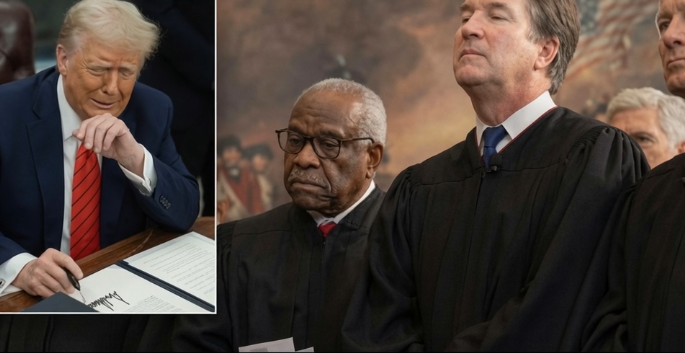
A recent statement from U.S. Supreme Court Justice Clarence Thomas has drawn attention after the Court declined to hear a lawsuit filed by Florida against Washington and California. The case centered on allegations related to commercial driver licensing and raised questions about the Supreme Court’s constitutional role in resolving disputes between states.
In a dissent joined by Justice Samuel Alito, Thomas argued that the Court should have accepted the case. He emphasized that the Constitution grants the Supreme Court original jurisdiction over disputes between states and questioned whether the Court has the authority to decline such cases.
Thomas cited federal regulations governing commercial driver’s licenses, noting that applicants are generally required to meet standards related to language proficiency, testing, and legal status. He argued that Florida’s claims warranted judicial review and that refusing to hear the case left unresolved legal questions involving multiple states.
The majority of the Court did not provide a detailed explanation for declining the lawsuit, a common practice when denying review. As a result, the underlying claims will not be considered by the Supreme Court.
The decision has sparked debate among legal observers about the extent of the Court’s discretion in interstate disputes. Supporters of Thomas’s position contend that the Court has a constitutional obligation to hear such cases, while others argue that the Court retains authority to determine which matters merit review.
The disagreement highlights ongoing discussions about constitutional interpretation and the Supreme Court’s role in the federal system.