In a landmark 8-1 ruling, the Supreme Court has dealt a significant blow to telecommunications giants AT&T and Verizon, upholding the Federal Communications Commission’s (FCC) authority to levy substantial fines for privacy violations. The case centered on a high-stakes dispute over the legality of the FCC’s administrative enforcement process, which the companies argued bypassed their Seventh Amendment right to a jury trial. By siding with the regulatory agency, the nation’s highest court has preserved a critical tool used by the federal government to police the telecommunications industry and protect consumer data privacy across the United States.
The legal battle reached the Supreme Court following conflicting decisions in lower federal courts. Last year, the 5th U.S. Circuit Court of Appeals sided with AT&T, throwing out a fine on the grounds that the FCC’s internal adjudication process improperly avoided a jury. Conversely, the 2nd Circuit reached the opposite conclusion in a similar challenge brought by Verizon. The Supreme Court’s intervention was necessary to resolve this circuit split and clarify whether administrative penalties for privacy breaches require an initial jury determination before they can be issued.
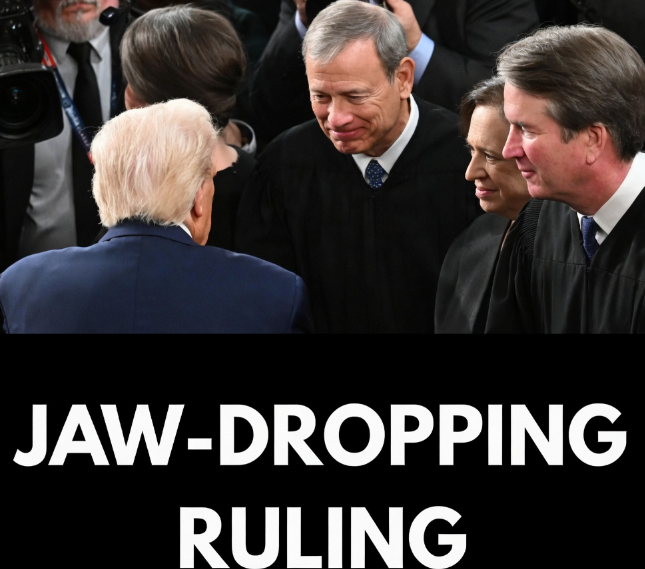
Writing for the majority, Chief Justice John Roberts dismantled the carriers’ arguments by highlighting a crucial technicality in the FCC’s forfeiture proceedings. Roberts noted that FCC penalty orders do not, by themselves, create a binding legal obligation to pay. Instead, if a company refuses to comply with a fine, the government must initiate a collection action in a federal court. At that stage, the companies would have the opportunity to present their case before a jury. Because this alternative path remains available to the carriers, the Court concluded that the current administrative process does not deprive companies of their constitutional safeguards.
The fines at the heart of the controversy totaled $104 million, stemming from allegations that AT&T and Verizon mishandled customers’ real-time location data. Investigations revealed that this sensitive information was being accessed by unauthorized third parties, including bounty hunters and even a rogue sheriff, to track individuals without their knowledge or consent. While the companies argued that the FCC’s enforcement framework was structurally flawed, the Court viewed the agency’s actions as fitting comfortably within existing Seventh Amendment precedents regarding civil penalties.
While Justice Clarence Thomas stood as the lone dissenter, other members of the bench, including Justice Brett Kavanaugh, suggested during oral arguments that the carriers had actually gained legal clarity from the proceedings. Kavanaugh pointed out that the government’s admission that these orders are not self-executing effectively confirms the companies’ right to a jury trial should they choose to contest a fine to the fullest extent. This ruling not only reinforces the FCC’s current oversight capabilities but also shields other federal regulatory agencies from similar constitutional challenges that could have crippled their ability to impose administrative penalties for corporate misconduct.
Advocacy groups, such as Public Knowledge, have lauded the decision as a massive victory for consumer rights and data security. John Bergmayer, the group’s legal director, emphasized that the FCC must remain empowered to hold corporations accountable when they fail to protect sensitive personal information. By affirming the current enforcement model, the Supreme Court ensures that the FCC can continue to fulfill the mandate given to it by Congress to monitor and penalize the misuse of consumer data in an increasingly digital and connected world.