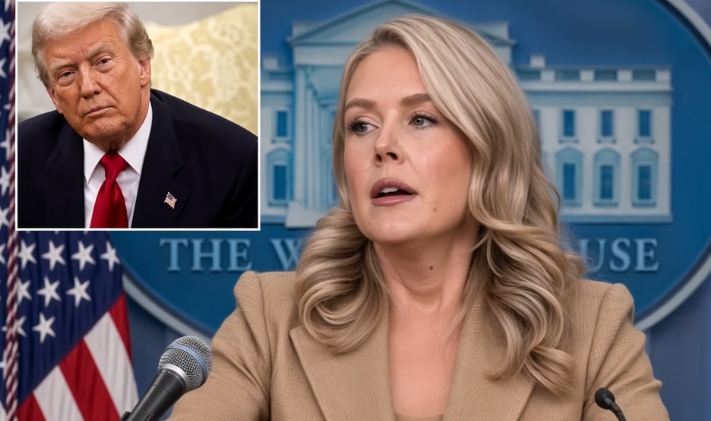
White House Press Secretary Karoline Leavitt presented a compelling statistic about how accessible President Donald Trump has been just a year into taking office and how little the public ever saw former President Joe Biden during his term.
1
While speaking at a media event hosted by Axios co-founder Mike Allen, Leavitt highlighted the contrast between President Donald Trump’s accessibility and that of Biden. She also pointed out that many in the media overlooked Biden’s avoidance of the media and his largely “hiding” behavior during his four years in office.
“You have tailed access to the ‘Associated Press,’ which reaches half the world’s population every day. The most definitive photo of President Trump, the fight, fight, fight photo after the assassination attempt in Butler, Pennsylvania, was made by Evan Vucci, who’s the chief photographer in Washington for the ‘Associated Press.’ Do you worry about history being lost with these new restrictions?” Allen asked Leavitt.
“There are thousands of outlets who have White House press credentials. There are hundreds that actually show up every day and cover the beat. Why should a single outlet have the privilege of being in that 13 person press pool every single day. And so the changes we’ve made have actually created more transparency, more accessibility, and greater access for a broad variety of outlets and a diversity of journalists, which I think is a good thing. And we’ve seen that play out,” Leavitt added.
“I mean, we started this. I think you’re all still getting your news, right? You’re still hearing about what the administration is doing every single day, because we have good journalists who are in that room covering the president every single time,” Leavitt said.
Allen jumped in and asked: “The counter to that is in a White House Correspondents Association’s statement about the White House changes to the position of wire services in the pool. And the statement says the government should not be able to control the independent media that covers it. Do you agree with that statement?”
While speaking at a media event hosted by Axios co-founder Mike Allen, Leavitt highlighted the contrast between President Donald Trump’s accessibility and that of Biden. She also pointed out that many in the media overlooked Biden’s avoidance of the media and his largely “hiding” behavior during his four years in office.
“You have tailed access to the ‘Associated Press,’ which reaches half the world’s population every day. The most definitive photo of President Trump, the fight, fight, fight photo after the assassination attempt in Butler, Pennsylvania, was made by Evan Vucci, who’s the chief photographer in Washington for the ‘Associated Press.’ Do you worry about history being lost with these new restrictions?” Allen asked Leavitt.
“There are thousands of outlets who have White House press credentials. There are hundreds that actually show up every day and cover the beat. Why should a single outlet have the privilege of being in that 13 person press pool every single day. And so the changes we’ve made have actually created more transparency, more accessibility, and greater access for a broad variety of outlets and a diversity of journalists, which I think is a good thing. And we’ve seen that play out,” Leavitt added.
“I mean, we started this. I think you’re all still getting your news, right? You’re still hearing about what the administration is doing every single day, because we have good journalists who are in that room covering the president every single time,” Leavitt said.
Allen jumped in and asked: “The counter to that is in a White House Correspondents Association’s statement about the White House changes to the position of wire services in the pool. And the statement says the government should not be able to control the independent media that covers it. Do you agree with that statement?”
While speaking at a media event hosted by Axios co-founder Mike Allen, Leavitt highlighted the contrast between President Donald Trump’s accessibility and that of Biden. She also pointed out that many in the media overlooked Biden’s avoidance of the media and his largely “hiding” behavior during his four years in office.
“You have tailed access to the ‘Associated Press,’ which reaches half the world’s population every day. The most definitive photo of President Trump, the fight, fight, fight photo after the assassination attempt in Butler, Pennsylvania, was made by Evan Vucci, who’s the chief photographer in Washington for the ‘Associated Press.’ Do you worry about history being lost with these new restrictions?” Allen asked Leavitt.
“There are thousands of outlets who have White House press credentials. There are hundreds that actually show up every day and cover the beat. Why should a single outlet have the privilege of being in that 13 person press pool every single day. And so the changes we’ve made have actually created more transparency, more accessibility, and greater access for a broad variety of outlets and a diversity of journalists, which I think is a good thing. And we’ve seen that play out,” Leavitt added.
“I mean, we started this. I think you’re all still getting your news, right? You’re still hearing about what the administration is doing every single day, because we have good journalists who are in that room covering the president every single time,” Leavitt said.
Allen jumped in and asked: “The counter to that is in a White House Correspondents Association’s statement about the White House changes to the position of wire services in the pool. And the statement says the government should not be able to control the independent media that covers it. Do you agree with that statement?”
While speaking at a media event hosted by Axios co-founder Mike Allen, Leavitt highlighted the contrast between President Donald Trump’s accessibility and that of Biden. She also pointed out that many in the media overlooked Biden’s avoidance of the media and his largely “hiding” behavior during his four years in office.
“You have tailed access to the ‘Associated Press,’ which reaches half the world’s population every day. The most definitive photo of President Trump, the fight, fight, fight photo after the assassination attempt in Butler, Pennsylvania, was made by Evan Vucci, who’s the chief photographer in Washington for the ‘Associated Press.’ Do you worry about history being lost with these new restrictions?” Allen asked Leavitt.
“There are thousands of outlets who have White House press credentials. There are hundreds that actually show up every day and cover the beat. Why should a single outlet have the privilege of being in that 13 person press pool every single day. And so the changes we’ve made have actually created more transparency, more accessibility, and greater access for a broad variety of outlets and a diversity of journalists, which I think is a good thing. And we’ve seen that play out,” Leavitt added.
“I mean, we started this. I think you’re all still getting your news, right? You’re still hearing about what the administration is doing every single day, because we have good journalists who are in that room covering the president every single time,” Leavitt said.
Allen jumped in and asked: “The counter to that is in a White House Correspondents Association’s statement about the White House changes to the position of wire services in the pool. And the statement says the government should not be able to control the independent media that covers it. Do you agree with that statement?”