Federal Prosecutors Charge Two Men in First Major Cases Under New Federal Deepfake Pornography Law
BROOKLYN, N.Y. — Federal authorities have arrested and indicted two men accused of using artificial intelligence to create and distribute non-consensual deepfake pornography featuring celebrities, politicians, and private individuals, marking some of the earliest prosecutions under the Take It Down Act, a bipartisan law signed last year aimed at combating the surge in AI-generated sexual abuse material.
Cornelius Shannon, 51, of New Jersey, and Arturo Hernandez, 20, of Texas, were arrested Tuesday on charges related to the production and online dissemination of explicit AI-generated images and videos. The two men operated independently and are not believed to be connected, according to court documents.
U.S. Attorney Joseph Nocella for the Eastern District of New York said the defendants “used cutting-edge digital technology to create images that degraded and violated” dozens of women. “This case makes clear that posting deepfake pornography is not a victimless crime,” Nocella said in a statement.
Shannon is accused of publishing at least 240 albums of AI-generated pornography that featured prominent female politicians, musicians, singers, and other public figures. Hernandez allegedly created deepfakes of both celebrities and private individuals, including recent high school graduates. Both face up to two years in federal prison if convicted.
The charges come as authorities grapple with the rapid proliferation of sophisticated AI tools capable of producing realistic fake intimate imagery. The Take It Down Act, enacted in 2025, strengthens penalties for sharing non-consensual intimate images—commonly known as “revenge porn”—and specifically targets AI-generated deepfakes created without consent. The law also requires social media platforms to swiftly remove such content upon verified victim requests.
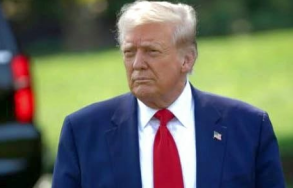
President Donald Trump signed the legislation last year with broad bipartisan backing. It was co-sponsored by Texas Republican Sen. Ted Cruz and Minnesota Democratic Sen. Amy Klobuchar. First Lady Melania Trump publicly endorsed the measure, helping build momentum for its passage.
“This is also a landmark move towards establishing common-sense rules of the road around social media and AI,” Klobuchar said in a statement following the bill’s signing. “We must provide victims of online abuse with the legal protections they need when intimate images are shared without their consent, especially now that deepfakes are creating horrifying new opportunities for abuse.”
Cruz added: “Predators who weaponize new technology to post this exploitative filth will now rightfully face criminal consequences, and Big Tech will no longer be allowed to turn a blind eye to the spread of this vile material.”
The Information Technology and Innovation Foundation, a tech policy think tank, described the law as “an important step forward” that equips victims with tools to seek justice. Meta, the parent company of Facebook and Instagram, has also voiced support for the legislation.
The latest cases highlight growing concerns about deepfake pornography’s impact on both public figures and ordinary people. In Ohio last month, a man became the first person convicted under the Take It Down Act after pleading guilty to using AI to generate child sexual abuse material. In Pennsylvania, two teenage boys were placed on probation in March for creating explicit AI images of their classmates at a private school.
The issue has also sparked civil litigation. Earlier this year, three high school students in Tennessee filed a lawsuit against Elon Musk’s xAI, alleging that the company’s Grok AI tools were used to transform their real photos into sexually explicit images. The students are seeking class-action status to represent what they claim are thousands of other minors affected nationwide.
Experts say the emergence of advanced generative AI has dramatically lowered the barrier for creating convincing deepfakes, raising alarms among lawmakers, educators, and families. While the technology offers creative and productive applications, its misuse for sexual harassment and exploitation has prompted urgent calls for both legal and technical solutions, including improved detection tools and content moderation practices.
Prosecutors emphasized that the new law sends a clear message. By holding individuals accountable for creating and distributing this material, authorities hope to deter others and provide meaningful remedies for victims whose images and likenesses have been weaponized online.
The cases against Shannon and Hernandez are expected to test the scope and enforcement mechanisms of the Take It Down Act as it moves from legislation to courtroom application. Legal observers will be watching closely to see how federal courts interpret key provisions, particularly around intent, platform responsibilities, and the balance between protecting victims and preserving free speech.