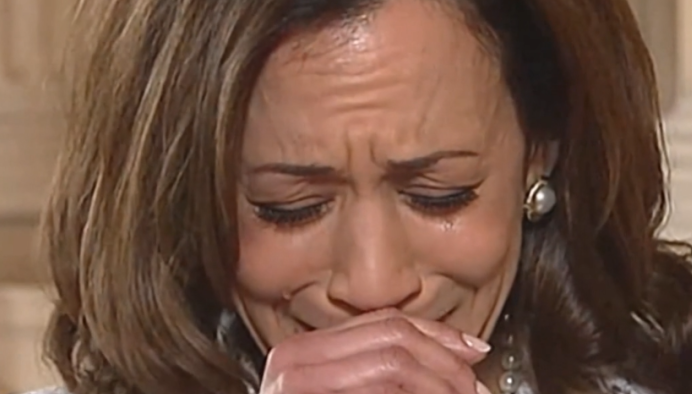
In a moment that will undoubtedly be etched into the annals of American history, the Democratic National Convention (DNC) recently witnessed a political milestone of unprecedented proportions. With the final votes tallied in California, Kamala Harris has been officially confirmed as the Democratic Party’s nominee for President of the United States. This confirmation represents more than just a party procedural; it is the culmination of a rapid and decisive shift in the American political landscape, marking the first time a woman of color has led a major party’s presidential ticket. The atmosphere within the arena was electric, characterized by an outpouring of cheers, waving signs, and emotional displays that underscored the gravity of this transition. For Harris, this is the moment she steps out of the shadow of being a second-in-command and becomes the singular face of the Democratic Party as it marches toward the high-stakes November election. The road to this nomination was paved by months of intense speculation and internal party maneuvering following the sudden decision of President Joe Biden to withdraw from the race. While Biden’s immediate endorsement of Harris ostensibly cleared the path, the party still required a formal and unified vote to solidify her standing. The process was notably fast and decisive, signaling a desire for unity amidst a political season fraught with tension. Even though some segments of the party expressed reservations regarding the accelerated process, the final outcome was unanimous enough to project a front of solidarity. Harris now carries the formidable responsibility of leading a party that has long been pulled in various ideological directions, ranging from centrist pragmatism to progressive idealism. Strategically, the Harris campaign is expected to lean heavily into three central pillars: reproductive rights, economic fairness, and climate policy. While these issues have been staples of the current administration, advisors indicate that Harris intends to package them with a significantly sharper edge. Her messaging strategy is designed to be more aggressive, seeking to draw a stark contrast between her vision and that of her Republican opponent. This approach is not merely about policy differences; it is an attempt to force voters to weigh differences in temperament, worldview, and fundamental leadership styles. Supporters view Harris as a charismatic and battle-tested leader, uniquely capable of re-energizing young voters, moderates, and women of color who may have felt disillusioned by previous political cycles.
However, the analytical reality of the situation is that the path to the Oval Office remains brutal and fraught with obstacles. Harris inherits a party structure that is still dealing with deep-seated ideological fractures. She faces the daunting task of reconciling progressives, who are often frustrated with centrist decision-making, with moderates, who fear the loss of middle-American independents. Furthermore, she must appeal to a segment of the electorate that is politically burned-out and skeptical of the established two-party system. The challenge of building a broad coalition under one roof while simultaneously reaching out to undecided voters is perhaps the greatest test of her political career. The opposition has already begun its counter-offensive. Republicans and conservative commentators wasted no time in framing the upcoming election as a direct referendum on the Biden-Harris administration. Their strategy focuses on highlighting perceived weaknesses in inflation, immigration, foreign policy, and crime. By painting Harris as a mere extension of current administration policies, the opposition aims to capitalize on economic uncertainty and public anxiety. Conversely, the Harris campaign insists that she will chart her own unique course, leveraging her background as a prosecutor and California’s attorney general to project a sense of competence and toughness that can withstand Republican scrutiny. Current polling data suggests that the race is exceptionally tight, particularly in critical swing states and battleground suburbs. While Harris enjoys strong support among college-educated women and minority communities, she continues to face challenges with older voters and those primarily concerned with economic stability. The contrast in voter perception is striking: her opponent often scores higher on perceived “toughness,” while Harris leads in areas of competence, empathy, and understanding the struggles of the middle class. This volatility suggests that the election could swing in either direction, making every rally, debate, and headline a potential turning point in the national narrative. During her acceptance speech, Harris struck a masterful balance between gratitude and a call to action. She paid homage to Joe Biden‘s decades of public service before pivoting to the core stakes of the election. Her rhetoric was firm, particularly regarding reproductive freedom, where she argued that no politician should have the authority to control a woman’s body. On the economic front, she advocated for rebuilding the economy “from the middle out,” a direct rebuttal to top-down economic theories. Her commitment to the climate crisis was framed with the “urgency science demands,” signaling a more progressive stance on environmental policy than previous iterations of the ticket might have projected. Ultimately, Kamala Harris is no stranger to high-pressure environments. Her career has been defined by tough fights in the public eye—from her days as a senator to her tenure in the vice presidency. She has lived within the “storm” of national scrutiny for years, a fact her supporters believe makes her uniquely prepared for the upcoming political battle. As the campaign officially kicks off in its new form, the world is watching a daughter of immigrants and a former prosecutor attempt to reach the highest office in the land. The stakes for the country’s political direction, its economy, and its global standing have never been higher, setting the stage for one of the most consequential and combative elections in modern American history.