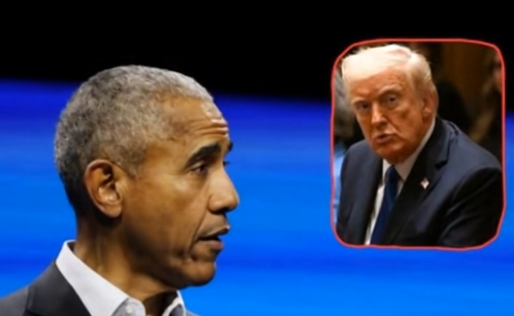
In a sharp escalation of both rhetoric and military action, President Donald Trump has issued a scathing critique of Barack Obama’s foreign policy legacy, linking past diplomatic efforts to current hostilities in the Middle East. This political broadside coincided with confirmed military action by U.S. Central Command (CENTCOM), which conducted defensive strikes in southern Iran to neutralize immediate threats to American personnel and global shipping. The strikes targeted Iranian Revolutionary Guard Corps (IRGC) assets, including missile launch sites and vessels allegedly attempting to deploy naval mines near the Strait of Hormuz, a critical chokepoint for the world’s oil supply. Explosions were reported in the strategic coastal areas of Bandar Abbas, Sirik, and Jask, marking a significant moment of direct kinetic engagement between the two nations.
Trump explicitly blamed the previous administration for empowering the regime in Tehran, famously stating, “Don’t forget the one who funded Iran and caused this war to happen. Obama!” This criticism centers on the controversial 2016 transfer of $1.7 billion in cash and foreign currency to Iran following the implementation of the Iran nuclear agreement. The payment, which the Obama administration defended as a settlement of a decades-old legal dispute dating back to the 1979 Islamic Revolution, has long been a point of contention for Republicans. Trump and his allies argue that these funds—delivered in pallets of cash to bypass sanctions—effectively financed Tehran’s regional expansion, proxy militias, and missile development programs, creating the very instability the U.S. faces today.
The military dimension of the confrontation was characterized as purely defensive by CENTCOM spokesperson Capt. Tim Hawkins. According to official statements, U.S. forces acted to protect warplanes and maritime operations after being targeted by an Iranian surface-to-air missile site in Bandar Abbas. Senior officials emphasized that these tactical strikes were not intended to dissolve the current ceasefire framework but were necessary to deter IRGC forces from obstructing strategic shipping lanes. This shift toward military deterrence and economic pressure represents the core of the current administration’s strategy, which posits that the Iranian regime only responds to displays of strength rather than extended diplomatic negotiations.
The debate over these strikes also revived historical legislative efforts by figures such as Sen. Marco Rubio and Rep. Ed Royce, who previously sought to prohibit large cash payments to state sponsors of terrorism. They argued that the timing of the 2016 payments, which coincided with the release of American hostages, set a dangerous precedent for ransom-taking. As Trump doubles down on his “maximum pressure” campaign, the international community remains focused on the Strait of Hormuz. While U.S. officials state that the immediate operation has concluded, American forces remain on high alert, prepared to respond to further provocations in one of the world’s most volatile geopolitical flashpoints.