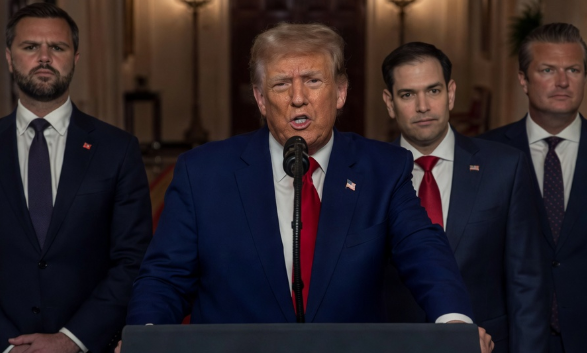
The administration of President Donald Trump, alongside Vice President JD Vance and Secretary of State Marco Rubio, is currently engaged in high-stakes diplomacy aimed at finalizing a deal to end the ongoing conflict in Iran. While the administration is pushing for a definitive resolution, Secretary Rubio has maintained a firm stance on international maritime security. During a recent visit to India, Rubio emphasized that the reopening of the Strait of Hormuz is a non-negotiable priority for the world economy, describing the current situation as both illegal and unsustainable. According to Rubio, while talks are progressing in Qatar, the President is prepared to walk away from the table if the result is anything less than a “good deal.”
This diplomatic push occurs against a backdrop of military volatility. U.S. Central Command recently authorized what they characterized as “self-defense strikes” in southern Iran to neutralize immediate threats to American personnel. Captain Tim Hawkins, a spokesperson for Central Command, confirmed that the targets included missile launch sites and Iranian boats attempting to deploy mines in strategic waterways. These strikes took place near the critical Iranian naval base at Bandar Abbas, highlighting the continued friction between U.S. Navy warships—including two aircraft carriers—and Iranian forces in the Gulf of Oman and the Arabian Sea.
Despite the military exchanges, negotiators in Qatar report significant progress. Esmaeil Baqaei, a spokesperson for the Iranian foreign ministry, acknowledged that Tehran and Washington have reached a conclusion on a large portion of the issues under discussion. However, Baqaei warned that a final agreement is not yet “imminent,” accusing the United States of shifting its positions during the final phases of the talks. The core of the proposed deal involves Iran agreeing to eliminate its stockpiles of highly enriched uranium and accepting stringent caps on future nuclear enrichment in exchange for the lifting of the U.S. naval blockade and the easing of economic sanctions.
President Trump has framed these negotiations as a corrective measure against the 2015 nuclear deal brokered by the Obama administration. Trump has been vocal in his criticism of the previous framework, alleging it provided Iran with a clear path to a nuclear weapon and massive cash reserves. The current administration’s objective is to secure a more robust, enforceable agreement that extends well beyond the 2015 limits. Top officials suggest that Iran has become more receptive to these demands following recent military operations, though the final focus remains on the specific language of enforcement to ensure a long-term commitment against enrichment.