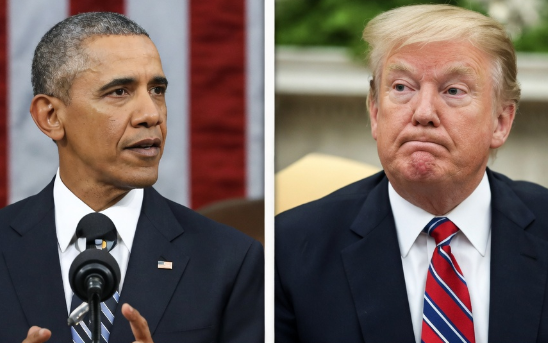
The geopolitical rivalry between President Donald Trump and former President Barack Obama has intensified following a series of high-stakes political shifts in Europe and the Middle East. The most recent point of contention centers on the national elections in Hungary, where the Trump-aligned incumbent, Victor Orban, was defeated after sixteen years in power by the left-wing challenger Peter Magyar. Despite a strategic last-minute campaign push from the Trump administration—which included dispatching Vice President JD Vance to the region—the opposition secured a comfortable victory. Obama publicly lauded the result on social media, framing it as a monumental success for the resilience of the Hungarian people and a vital reaffirmation of the rule of law and democratic principles worldwide.
Beyond the electoral fallout in Europe, the domestic and personal feuding between the two leaders continues to escalate. Obama has drawn scrutiny for his involvement in redistricting efforts within Virginia and California, a move critics highlight as inconsistent with his previous opposition to similar redistricting in Republican-leaning states like Texas and Missouri. Furthermore, Obama’s recent address during the funeral services for the Rev. Jesse Jackson sparked a significant backlash. The speech, which targeted Trump and the broader MAGA movement with rhetoric some described as fearmongering, even prompted a rare public rebuke from Jesse Jackson Jr., who suggested the tone was inappropriate for the occasion.
On the international stage, Trump and War Secretary Pete Hegseth have pivoted their criticism toward Obama’s past foreign policy decisions regarding Tehran. As the United States and Israel enter the fourth week of Operation Epic Fury—a military campaign designed to neutralize Iran’s military capabilities—Trump has attributed the regime’s current strength to the Obama administration’s previous concessions. Specifically, Trump pointed to the $1.7 billion cash transfer made during the execution of the Iran nuclear deal. He argued that these funds directly enabled the Iranian regime to develop the ballistic missiles currently being used to target American installations and allied forces across the Middle East.
During a detailed address at the FII PRIORITY Summit, Trump ridiculed the logistics of the 2016 payment, describing Boeing 757 jetliners stripped of their seats to accommodate piles of cash. While Obama has historically justified the payment as a settlement for a legal claim dating back to the 1979 Islamic Revolution and the fall of the Shah, Trump maintains that the action was a catastrophic strategic failure. Trump asserted that his decision to terminate the nuclear agreement early in his first term was the only reason Iran had not yet achieved a nuclear weapon. He concluded that without his intervention, the regime would have long ago utilized such a weapon to destabilize Israel and the surrounding region, further cementing the ideological gulf between the two presidents regarding national security.