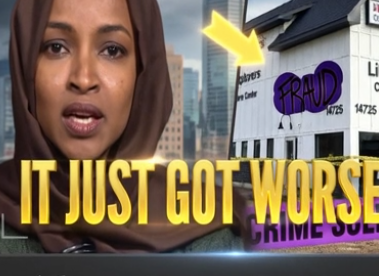
Democratic political strategist James Carville renewed his criticism of Rep. Ilhan Omar during a recent podcast appearance, again suggesting that the progressive lawmaker consider leaving the Democratic Party.
Carville made the remarks during an interview on Straight Shooter podcast, hosted by sports commentator Stephen A. Smith. Smith asked Carville about comments he made in May 2025 on his own podcast, Politics War Room, where he sharply criticized Omar, a member of the progressive group of lawmakers often referred to as “the Squad.”
Carville, who rose to prominence as a strategist for former President Bill Clinton, said his views on Omar have not changed since those earlier remarks. He again questioned whether her political approach aligns with the broader electoral strategy of the Democratic Party, highlighting ongoing ideological tensions between moderates and progressives within the party. “Why don’t you just get out of the Democratic Party and start your own movement?” Carville said when discussing Omar’s political stance. His criticism partly referenced comments Omar made in a 2018 interview with the Middle East media outlet Al Jazeera. During that interview, Omar argued that the United States should be more concerned about violence from white men. Carville said such remarks risk alienating a significant portion of the electorate. Citing crime data reported by the Federal Bureau of Investigation and the U.S. Department of Justice, Carville argued that broad generalizations about demographic groups can be politically counterproductive. He also suggested that Omar might align more naturally with organizations such as the Democratic Socialists of America, noting that Rep. Alexandria Ocasio-Cortez has maintained an affiliation with the group while serving as a Democrat in Congress. Carville emphasized that successful national campaigns require support from a broad coalition of voters across racial, gender, and political lines in the United States. He cautioned against rhetoric that categorizes voters by identity, arguing that electoral success depends on appealing to diverse constituencies. Omar has previously faced criticism for several public statements, including remarks regarding U.S. foreign policy in Muslim-majority countries during Ramadan and comments related to conflicts such as the war in Iraq.