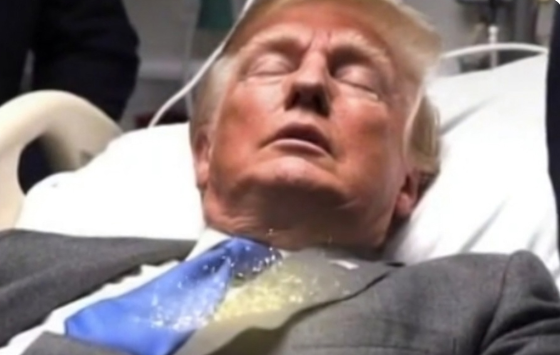
In recent days, a surge of digital misinformation has swept across social media platforms, alleging that former President Donald Trump was “shot again” in Washington D.C. or at his residence. These claims, often presented with sensationalist headlines such as “Shock in D.C.: President Donald Trump shot AGAIN,” have proliferated through unverified YouTube clips, TikTok videos, and posts on X (formerly Twitter). However, as a matter of journalistic record, there is no credible evidence to support these assertions. Major news organizations, including the Associated Press, Reuters, BBC, and The New York Times, have issued no reports of a recent attack, and official government agencies like the United States Secret Service have confirmed no such incident has occurred.
To understand why these rumors have gained such traction, one must look at the factual history of security incidents involving Donald Trump. The most significant and verified event took place on July 13, 2024, during a campaign rally in Butler, Pennsylvania. In that instance, a gunman positioned on a nearby rooftop opened fire with an AR-style rifle, grazing Donald Trump in the right ear. That attack resulted in the tragic death of a rally attendee and left several others seriously injured. The perpetrator was neutralized by a Secret Service counter-sniper team. This event remains the only confirmed instance of a direct shooting targeting the former president in recent history, and it is frequently the source of recycled footage used in modern misinformation campaigns.
Confusion has been further exacerbated by a series of secondary security events that, while serious, did not involve Donald Trump being harmed. In September 2024, a security scare occurred at the Trump International Golf Club in West Palm Beach, Florida. While shots were fired by Secret Service agents after spotting a weapon in the vicinity, Donald Trump was not injured. Furthermore, incidents occurring in 2025 involving the National Guard near the White House have been conflated with the former president’s personal safety. Reports of a shooting that left one National Guard member dead and another injured in Washington D.C. were factual, and though Donald Trump commented on the tragedy, he was never a victim of that specific violence. These distinct events are often blurred together by bad actors to create a narrative of ongoing peril.
The rapid spread of these “shot again” claims highlights a systemic issue within the digital information ecosystem. Algorithms on platforms like Facebook and YouTube are designed to prioritize high-engagement content, which often translates to sensational, fear-based, or shocking headlines. When a video claims that a high-profile figure has been attacked “minutes ago,” it triggers an emotional response that bypasses the viewer’s critical thinking, leading to immediate shares and clicks. For content creators, this “clickbait” strategy is a lucrative way to generate advertising revenue, regardless of the psychological or societal toll of spreading false information.
Journalistic integrity requires a rigorous verification process that social media influencers often ignore. When an event as monumental as an assassination attempt on a U.S. President or a major political candidate occurs, the news cycle reacts with a specific, identifiable pattern: immediate confirmation from the White House press pool, live broadcasts from CNN and MSNBC, and official statements from law enforcement. The absence of this coordinated reporting is the first and most significant red flag that a claim is fraudulent. In the case of the recent rumors in Washington D.C., the silence from reputable newsrooms serves as a definitive debunking of the viral claims.
Beyond domestic security issues, the current news cycle regarding Donald Trump has actually focused on international diplomacy and administrative duties. For instance, recent verified reports discuss his involvement in ceasefire negotiations between Thailand and Cambodia. These diplomatic efforts, while important, do not generate the same visceral engagement as a shooting report, which is why misinformation peddlers choose to fabricate violence rather than report on policy. This serves as a stark reminder for the public to diversify their news sources and rely on outlets with established editorial standards.
In conclusion, the claim that Donald Trump was shot “minutes ago” is a demonstrably false narrative built on recycled clips and misleading headlines. While the 2024 shooting in Pennsylvania was a harrowing and factual event, it is currently being used as a template for digital hoaxes. To stay accurately informed, readers must approach breaking news with a critical eye, looking for corroboration from PBS, CBS, or the Washington Post before accepting social media rumors as fact. In an era where information moves at the speed of a click, the responsibility of verification lies not only with the journalist but also with the consumer.