Systems Over Swarms: The Technical Reality of Modern Naval Defense
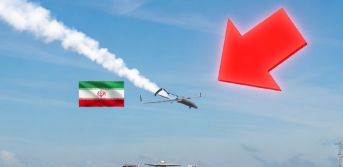
Recent footage released by the Revolutionary Guard depicting a drone swarm attack on the USS Abraham Lincoln highlights a calculated strategy of “quantity over quality.” By showcasing low-cost technology theoretically capable of overwhelming high-value naval assets in the Strait of Hormuz, Tehran aims to project power both domestically and internationally. However, professional military analysts argue that such propaganda oversimplifies the staggering technical realities of modern kinetic and electronic warfare. Real-world engagements are not won by cinematic displays but through the silent interplay of sensors and high-frequency data exchanges that occur far beyond visual range.
A primary defense mechanism for the U.S. Navy is the E-2D Hawkeye, an airborne early warning aircraft equipped with the sophisticated AN/APY-9 radar system. This platform is designed to identify low-flying, small-signature targets at long ranges, feeding vital information into the Cooperative Engagement Capability (CEC) network. This integration allows a Carrier Strike Group to function as a single, distributed sensor net rather than a collection of isolated ships. In this networked environment, a destroyer can successfully neutralize a target using tracking data provided by an aircraft miles away, making the “saturation” of a ship via a drone swarm significantly more difficult than propaganda suggests.
One of the most pressing concerns for naval planners has been “cost asymmetry”—the economic inefficiency of using multi-million dollar interceptors against mass-produced drones like the Shahed-136, which cost only a few thousand dollars to assemble. To counter this, the Navy is rapidly pivoting toward directed energy systems, such as high-powered microwave weapons and lasers. These systems draw power directly from shipboard generators, effectively shifting the tactical focus from limited “magazine depth” to sustainable “power management.” By disrupting drone electronics rather than relying on physical detonation, these systems threaten to break the economic logic underpinning current drone doctrines.
Despite the rise of directed energy, traditional layered defenses like the Phalanx Close-in Weapon System (CIWS), Rolling Airframe Missiles (RAM), and the Standard Missile (SM-6) remain essential. These are complemented by MH-60R Seahawk helicopters, which specialize in neutralizing fast-attack boats before they can close the distance. This creates a complex “choreography” managed by the Aegis combat system, which performs calculations at speeds no human commander could match in real time. Ultimately, a drone swarm launch may reveal more than it destroys; every launch requires radar and telemetry bursts that allow surveillance platforms to geolocate and map an adversary’s entire coastal defense network. Naval power is now defined by the seamless integration of sensors and algorithms that render the loudest propaganda obsolete.