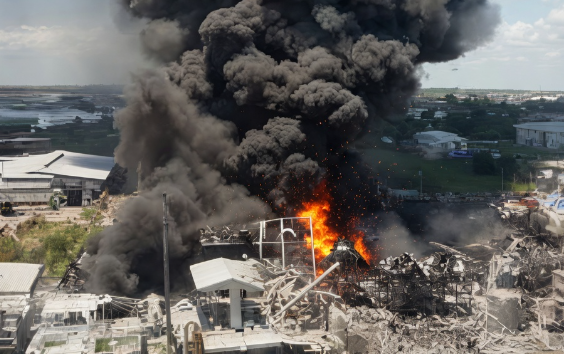
A devastating industrial fire has claimed the lives of four women at a biscuit manufacturing facility near Trikala, a city in central Greece. The incident, which occurred during the early morning hours, has sparked a significant emergency response and left the local community in mourning. According to reports from the Hellenic Fire Service and local authorities, the blaze broke out at approximately 4:00 a.m. at the Violanta factory, located roughly 200 miles north of Athens. While eight workers managed to escape the building safely, four bodies were recovered by search and rescue teams once they were able to penetrate the smoke-filled sections of the complex.
The scale of the fire necessitated a massive operation involving 40 firefighters and 15 specialized vehicles. The responders faced challenging conditions, including thick smoke and structural instability, as they worked to contain the flames and prevent them from spreading further across the industrial site. Beyond the confirmed fatalities, seven individuals required immediate hospitalization. Among those receiving medical care is a member of the fire brigade who was injured during the rescue efforts. At this stage, medical officials have prioritized the recovery of the injured while withholding specific details regarding their conditions.
In the immediate aftermath, Violanta released a public statement expressing deep sorrow and offering condolences to the families of the deceased. The company confirmed that the fire took place during a scheduled night shift and emphasized its commitment to cooperating fully with the Fire Department and other investigative bodies. The priority for Violanta remains the support of its workforce and the families affected by this tragedy. They have pledged transparency as inspectors begin the arduous task of determining what triggered the inferno, which some witnesses claim was preceded by a loud explosion.
The investigation into the cause of the disaster is currently in its preliminary stages. While early reports from the scene mentioned the sound of a blast, officials have not yet confirmed if an explosion was the primary cause or a secondary consequence of the fire. Greek authorities and forensic experts are examining several factors, including electrical systems and machinery maintenance. Workers at the site have noted that no gas cylinders were stored in the immediate vicinity of the fire’s origin, complicating the search for a definitive cause. Investigators are expected to rely heavily on surveillance footage and safety records to reconstruct the events of that morning.
This incident has brought renewed focus to industrial safety standards within Greece and the wider European Union. As an EU member state, Greece is bound by strict workplace safety directives designed to mitigate risks in high-heat environments like food manufacturing plants. Such facilities often house combustible materials—including flour dust, which can become explosive under specific conditions—and complex electrical infrastructure. Regulatory bodies are expected to conduct a comprehensive audit of the Violanta facility to ensure all fire suppression systems and emergency protocols were compliant with current laws.
The emotional impact on the Trikala region has been profound, as the factory is a major local employer. Local municipal leaders have offered support resources to the families of the victims and the surviving coworkers who witnessed the event. National media outlets, including Reuters, have closely monitored the situation, highlighting the gravity of the loss. As the technical review of the site continues, the focus remains on ensuring that such a tragedy is not repeated through the rigorous application of safety enhancements and lessons learned from this somber event.