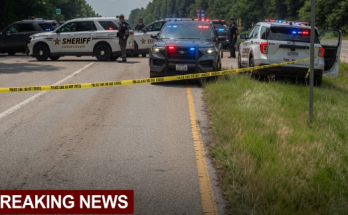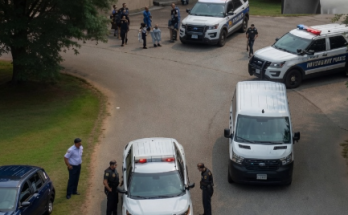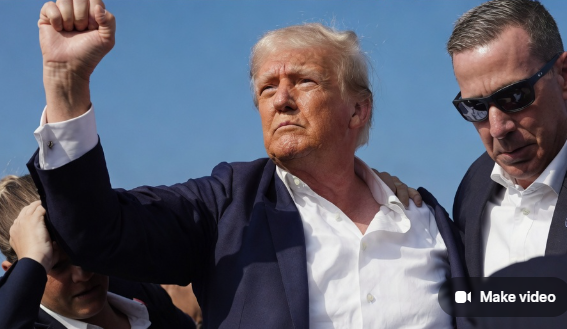
On the evening of April 25, 2026, the Washington Hilton—a site historically marked by the 1981 assassination attempt on Ronald Reagan—became the center of a profound security failure. During the White House Correspondents’ Dinner (WHCD), an event intended to celebrate the First Amendment and bridge the gap between the press and the presidency, a chaotic scene of gunfire erupted. What was meant to be a triumphant return for Donald Trump in his second term quickly devolved into terror, as over 2,600 high-profile attendees were forced to seek cover beneath tables in the International Ballroom. This subterranean space, long considered one of the most secure venues in the United States, was breached at approximately 8:40 p.m. just as the first course of the gala was being cleared.
The suspect was identified as Cole Tomas Allen, a 31-year-old from Torrance, California. Armed with a shotgun, a handgun, and multiple knives, Allen reportedly charged a Secret Service magnetometer checkpoint. During the initial confrontation, a Secret Service agent was shot in the chest, though his bullet-resistant vest prevented a fatality. Inside the ballroom, the atmosphere shifted instantly to “tuxedoed chaos.” The Secret Service Counter-Assault Team (CAT) formed a protective human wall around President Trump and First Lady Melania Trump, while Vice President JD Vance was rushed to a secure exit. Notable figures such as Robert F. Kennedy Jr., FBI Director Kash Patel, and Pete Hegseth were among those caught in the lockdown. The situation was further complicated by a total lack of cellular service in the underground facility, leaving journalists like Ali Vitali of NBC unable to report in real-time as the event unfolded. The physical exchange of gunfire lasted less than thirty seconds, but the security operation to clear the hotel spanned several hours. A five-block perimeter was established around Connecticut Avenue by the Metropolitan Police, TSA, and the National Guard. By 11:00 p.m., President Trump had returned to the White House to address the nation alongside Kash Patel and Acting Attorney General Jeanine Pirro. In his address, the President shifted the narrative toward a controversial policy objective: the construction of a dedicated White House Ballroom on the executive grounds. Trump argued that the night’s violence served as definitive proof that public venues are no longer safe for the executive branch, a move that D.C. urban planners and critics view as a step toward isolationist “fortress” optics. The investigation into the breach has exposed critical vulnerabilities in the security layers of the Washington Hilton. Reports suggest that Cole Tomas Allen may have been a registered guest at the hotel, allowing him to bypass external checkpoints. Furthermore, the WHCD reliance on a “flimsy” paper ticketing system rather than high-tech scanning has been flagged as a catastrophic oversight. The historical irony of the location, often called the “Hinckley Hilton,” was not lost on observers. Despite decades of technological advancement, the 2026 incident suggests that the physical risks of the site remain unresolved. The shooting has fundamentally altered the posture of political events in the capital, shifting the focus from democratic norms to tactical security and the potential end of public presidential galas.