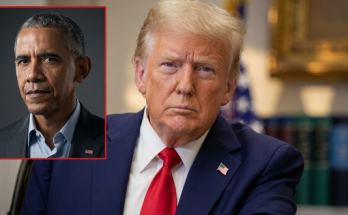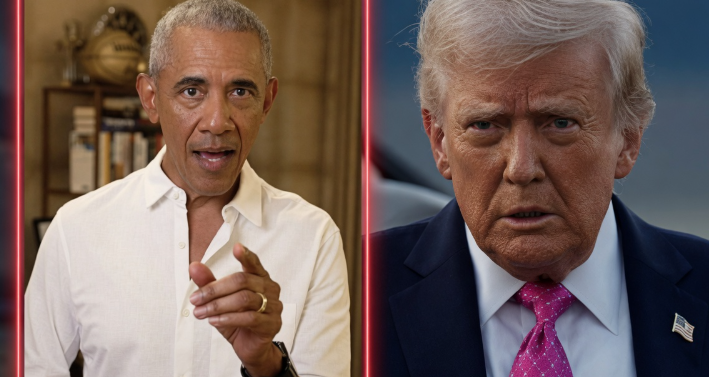
The long-standing political rift between President Donald Trump and former President Barack Obama has intensified following a significant electoral shift in Hungary. The administration’s preferred candidate, Victor Orban, was recently defeated by left-wing challenger Peter Magyar. Despite a high-profile, last-minute campaign push from Vice President JD Vance to bolster Orban’s support, Magyar secured a comfortable victory. Obama took to social media to celebrate the result, framing it as a global win for democracy and a testament to the resilience of the Hungarian people, similar to the 2023 elections in Poland.
Beyond international influence, the two leaders remain at odds over domestic maneuvers and ideological rhetoric. Obama has faced criticism for his shifting stance on redistricting, supporting the practice in Virginia and California while opposing it in various red states. Furthermore, Obama’s remarks following the passing of Rev. Jesse Jackson drew a sharp rebuke even from Jesse Jackson Jr., who criticized the former president for using a memorial occasion to launch political attacks against the Trump administration and Republicans. The most pointed criticisms, however, involve national security and the Iran nuclear legacy. Trump and War Secretary Pete Hegseth have recently lambasted Obama for the $1.7 billion cash payment made to Tehran during his tenure. Trump detailed how Boeing 757 jetliners were allegedly stripped of seats to transport piles of cash, which he argues funded Iran’s ballistic missile development and regional aggression. While the Obama administration originally justified the payment as a settlement for a legal claim dating back to 1979, Trump maintains that this financial infusion empowered the regime to target American and allied installations. These verbal salvos come as the United States and Israel enter the fourth week of Operation Epic Fury, a military initiative aimed at neutralizing Iran’s military capabilities. At the FII PRIORITY Summit, Trump reiterated that his decision to terminate the Iran nuclear deal was essential to preventing Tehran from obtaining a nuclear weapon. He asserted that the regime had been cheating on the agreement in secret, and that without his intervention, Israel and the wider Middle East would be facing a nuclear-armed adversary today.