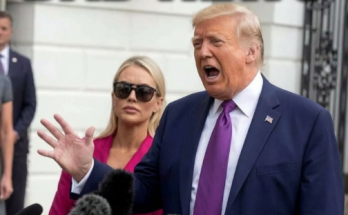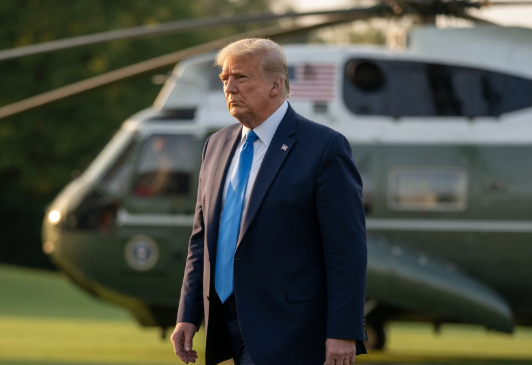
During a recent media engagement ahead of an economic summit in Pittsburgh, President Donald Trump drew public attention after C-SPAN cameras captured a visible bruise on his right hand. The mark was revealed as the 79-year-old president gestured while discussing the ongoing situation in Ukraine. Despite the social media speculation that followed, the White House and Press Secretary Karoline Leavitt maintained that the injury was minor and a byproduct of the president’s demanding schedule. Leavitt characterized Trump as a “man of the people,” attributing the bruising to his frequent and vigorous handshakes with thousands of Americans daily. The physical occurrence aligns with medical observations from the Mayo Clinic, which note that bruising becomes more frequent as individuals age. As skin thins and loses its protective lipid layer, capillaries become more susceptible to minor hits or pressure. Trump himself previously addressed similar marks during an interview with Time magazine, acknowledging that such bruising has become typical given his high level of personal interaction with the public. This biological reality, combined with his active participation in golf and a long workweek, provides a clinical context for the marks seen during his media appearance.
While the President continues his scheduled engagements, a new Quinnipiac University poll highlights a different kind of vulnerability within the Democratic Party. The survey revealed that 53% of Democrats are dissatisfied with their own party’s lawmakers in Congress. Among the general electorate, approval for Congressional Democrats has reached a historic low of 21%, a figure not seen since 2009. This decline comes as Republicans maintain control of the White House, the Senate, and the House, following a successful November election cycle that saw the GOP gain ground with traditionally Democratic constituencies, including black, Hispanic, and younger voters. The internal crisis for Democrats is exacerbated by a base that is increasingly frustrated with the party’s perceived passivity. As Donald Trump moves forward with a sweeping second-term agenda, Democratic leadership faces intense pressure to take a more forceful stance. This sense of political disarray has led to a sharp decline in favorability ratings for the party across multiple national polls. In contrast, Republican voters remain largely unified, with 79% expressing approval for how their lawmakers are performing, reflecting a stark partisan divide in legislative satisfaction as the new term progresses.