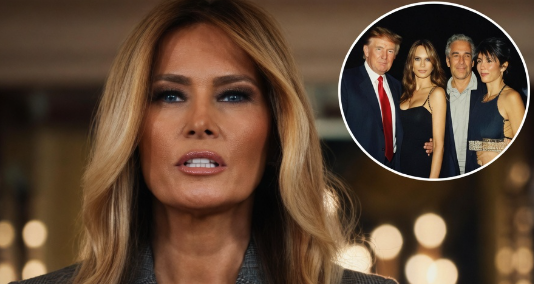
The political atmosphere in Washington has grown increasingly tense following a rare and direct public statement from Melania Trump. In an effort to address long-circulating associations with Jeffrey Epstein and Ghislaine Maxwell, she sought to draw a firm boundary between herself and a scandal that continues to erode public trust. Describing past interactions as mere social overlaps, she dismissed claims of a meaningful relationship as misrepresentations. Her intent was framed as a pursuit of closure through clarity, aiming to replace years of public speculation with a definitive rejection of any personal involvement in the illicit network. A central pillar of her statement was a call for transparency through public hearings, where survivors would be invited to testify under oath. While presented as a principled move toward recording the truth, this proposal ignited a significant backlash from victim advocacy groups and those who lived through the harm connected to Epstein. These survivors expressed a profound sense of fatigue, noting that they have already spent years carrying the burden of proof in courtrooms and investigative records. For them, the request to speak publicly once more felt less like an avenue for justice and more like a repetitive cycle of exposure without resolution.
This friction highlights a deeper divide in the pursuit of justice: the tension between formal proceduralism and the reality of survivor trauma. For many, the question is no longer whether the truth exists—given the vast amount of documentation and testimony already available—but why that truth has not yet led to fuller consequences for those involved. When institutions demand more visibility from victims without delivering meaningful results, the process risks being viewed as a delay tactic rather than a genuine advancement. For the victims, accountability should not depend on their willingness to repeatedly relive their past traumas. Observers also pointed to a notable silence regarding Donald Trump. While the statement was meticulous in defending the former First Lady’s personal position, it did not address her husband’s well-documented historical proximity to Epstein. In the high-stakes realm of political scandals, such omissions carry significant weight, often leaving the public to fill the void with their own interpretations and conclusions about the broader context of these social ties. Ultimately, the situation serves as a cautionary tale for Washington elites and legal institutions. True justice does not ignore those who have been harmed, nor does it repeatedly return them to the center of their pain when the path forward lies in action and institutional responsibility. The strongest position in such a scandal is not a loud defense, but a careful recognition that truth sought without care can inadvertently result in further harm. Moving forward requires a willingness for accountability to rest with those in power rather than the survivors.