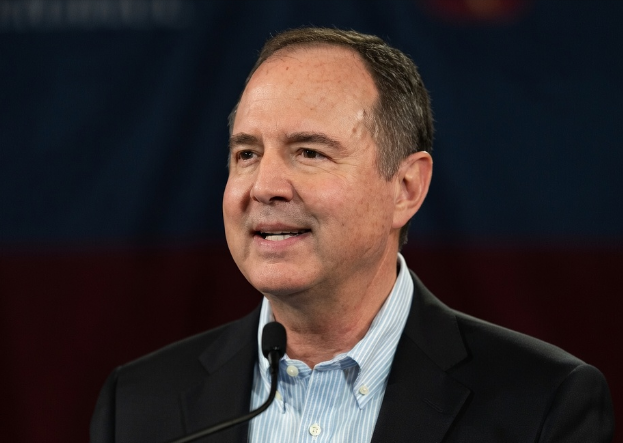
In a high-stakes primary that signals a significant shift in the political landscape of California, Democratic Representative Adam Schiff and Republican candidate Steve Garvey have emerged as the victors in the race for the U.S. Senate. This result sets the stage for a head-to-head general election in November, where Schiff is widely considered the frontrunner given the state’s deep-blue leaning. However, the success of Garvey, a former Major League Baseball star, indicates a potential resurgence of conservative messaging centered on economic reform. Notably, this election marks a historic transition, as California will find itself without a female senatorial representative for the first time in many years, following the passing of the legendary Dianne Feinstein in September at age 90. Steve Garvey, who is best known for his storied career with the Los Angeles Dodgers and San Diego Padres, has successfully pivoted from the baseball diamond to the political arena. Running as an outsider, Garvey expressed a desire to restore what he calls the “heartbeat” of California. Between 1969 and 1987, Garvey earned numerous accolades including a World Series title and a National League MVP award. He has stated that his life has been based on team building and leadership, skills he believes translate directly from sports into the world of business and politics. If elected, Garvey has pledged to meet with every other senator on his first day to begin building a rapport, emphasizing a collaborative approach to governance.
His campaign focuses heavily on the financial burdens facing residents, specifically citing inflation and the rising costs of food, gas, and education. Garvey advocates for a return to free-market capitalism and supports small businesses, which he views as the foundation of the state’s economy. He has been vocal about his motivation for running, stating that he could not find a candidate who shared his values amidst a political environment he describes as increasingly liberal. According to Garvey, the once-vibrant state has become a “murmur” due to safety and financial challenges, noting that hardworking citizens are often losing hundreds of dollars a month despite managing their lives well. On the Democratic side, Adam Schiff maintained his lead in the polls to secure his position as the clear winner of the primary. Schiff’s mainstream appeal was enough to overcome the challenges posed by his progressive colleagues, including Katie Porter and Barbara Lee. Porter found it difficult to balance Schiff‘s broad support with Lee‘s progressive message, ultimately losing out to Garvey’s outsider momentum. Despite his victory, Schiff faces ongoing scrutiny regarding his personal finances and residency. Allegations have surfaced claiming that Schiff has maintained primary residences in both Maryland and California for over a decade to take advantage of homeowner tax breaks. Critics point to 2017 tax records showing property tax payments made with checks bearing a Maryland address, a controversy that his opponents are likely to highlight as the general election approaches. The departure of Katie Porter and Barbara Lee from the race underscores the difficulty of balancing different ideological wings within the Democratic Party. The seat they were vying for was recently held by Laphonza Butler, who was appointed following Feinstein‘s passing but chose not to seek a full term. As the general election nears, the focus will remain on whether Garvey can build a broad enough coalition to challenge Schiff‘s dominance or if Schiff, who gained national fame for his role in the Trump-Russia investigations, will cruise to victory to represent the Golden State. Ultimately, the November election will determine who officially fills the void left by a figure who loomed large in California politics for 30 years, marking a new chapter in the state’s history.