Washington, D.C. is currently navigating a period of profound instability that transcends routine partisan bickering. Capitol Hill has become the staging ground for what many observers are calling a historic constitutional reckoning.
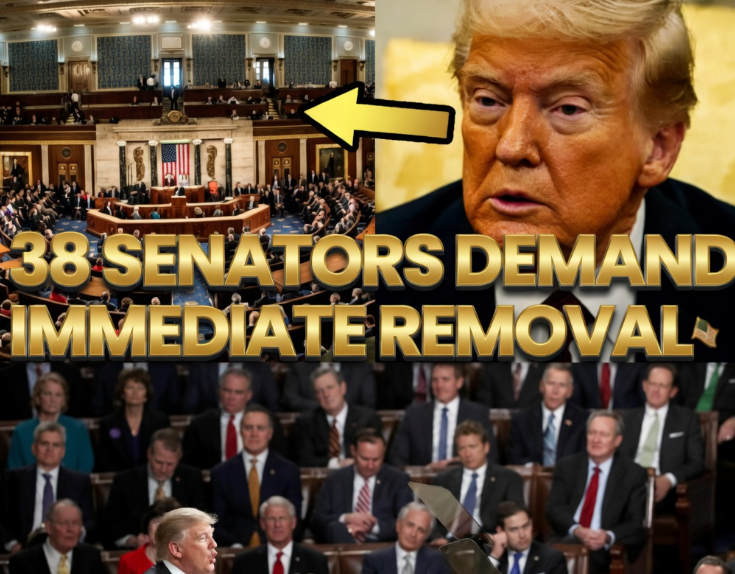
The catalyst for this sudden shift is a leaked message that allegedly ties President Donald Trump’s approach to global peace efforts to a personal desire to receive the Nobel Peace Prize. This revelation has prompted a sharp escalation in rhetoric, with 38 senators and dozens of other lawmakers publicly debating the merits of impeachment or removal via the 25th Amendment. While the White House maintains that the leak is a politically motivated distortion, the bipartisan nature of the concern suggests a deep fracture within the federal government. The discussion surrounding Section 4 of the 25th Amendment is particularly significant, as it represents a “constitutional nuclear option” designed for instances where a president is unable to discharge their duties. This mechanism requires the Vice President and a majority of the Cabinet to act—a threshold that is historically and legally arduous to meet. Despite these high barriers, the fact that sitting members of Congress are openly weighing such a drastic measure underscores the gravity of the current situation. Outside the legislative branch, public pressure is mounting rapidly, with nearly one million citizens signing petitions to demand immediate action. This movement has transformed the debate over presidential fitness into a defining political litmus test as the 2026 midterms approach. For Republicans, this moment presents an agonizing dilemma between traditional party loyalty and their broader institutional responsibility. The previous strategy of remaining silent is becoming increasingly untenable as public and media scrutiny intensifies. Conversely, Democrats are treading a fine line; they must navigate the risk of appearing strategically opportunistic while fulfilling what they describe as a duty to protect American democracy from a fundamental constitutional threat. The uncertainty is also being felt on the world stage, as international allies and global markets react to the potential for prolonged domestic turbulence in the United States, which could ripple across security commitments and trade alliances. Legal scholars remind us that the Founding Fathers designed the U.S. Constitution with built-in friction to ensure that elected power is not easily overturned by temporary emotional or political waves. However, the resilience of these constitutional guardrails is being tested in unprecedented ways. As Washington braces for upcoming hearings and hardening political lines, the underlying tension remains: can the nation’s democratic institutions absorb this level of systemic shock without cracking? The outcome of this struggle will likely redefine not only the current presidency but also the long-term stability and presidential fitness standards of the American executive branch.