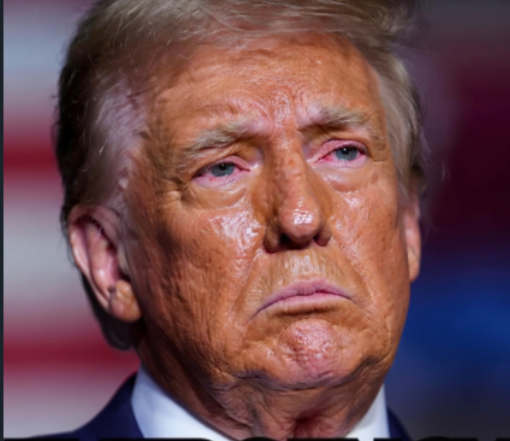
A recent survey conducted by The Economist and YouGov has revealed a surprising shift in the American political landscape: Donald Trump has seen a notable increase in his approval rating among women over the last two months. While the figures remain underwater—standing at 35 percent approval against 57 percent disapproval—the five-point jump from a previous low of 30 percent suggests a potential realignment within a demographic that remains crucial for the upcoming 2026
midterm elections. Political analysts are paying close attention to these fluctuations, as the female voting bloc is often the deciding factor in battleground races that determine the balance of power in Washington, D.C. Despite this marginal gain among women, the broader electoral outlook for the White House appears increasingly complex. Donald Trump is currently grappling with record or near-record low approval ratings among other essential groups, including men and independent voters. The national average for his approval currently sits at 38 percent, with a substantial 55 percent of the public expressing disapproval. This downward trend is largely attributed to mounting public anxiety over the rising cost of living and the geopolitical fallout from the ongoing war with Iran, which has failed to produce the traditional “rally around the flag” effect typically seen during international conflicts. Offering academic perspective on these shifts, Grant Davis Reeher, a professor of political science at Syracuse University, suggests that the uptick in female support may be linked to several external factors. Reeher notes that a shift in media focus away from the Epstein controversy, combined with public dissatisfaction regarding Democratic handling of the government shutdown and Department of Homeland Security (DHS) funding, may have inadvertently benefited the president. Furthermore, the president’s aggressive stance on Iran—a nation often criticized for its restrictive policies on women’s rights—may be resonating with certain female voters who view his actions as a defense of global human rights. However, economic sentiment remains a significant hurdle for the administration. Data indicates that only 37 percent of the public approves of the president’s handling of jobs and the economy, while 56 percent disapprove. These figures are even more pronounced regarding inflation and prices. This reality stands in stark contrast to the narrative promoted by the president on Truth Social, where he recently celebrated the addition of 186,000 private sector jobs and argued that his tariffs have created a powerful engine for economic growth. While the president touts a 52 percent reduction in the trade deficit, the polling suggests a disconnect between his reported successes and the financial pressure felt by ordinary Americans. The comparison to previous administrations and historical trends is equally sobering. Harry Enten, a data analyst for CNN, observed that Trump’s approval drop following the escalation of the Iran War mirrors the sharp decline seen by Joe Biden after the exit from Afghanistan—a slump from which the current incumbent never fully recovered. Even within his own party, cracks are appearing; a Fox News poll recently showed Republican approval dipping from 92 percent to 84 percent, marking a second-term low. Among independents, the situation is even more dire, with 75 percent expressing disapproval of the current leadership. While the polling numbers fluctuate, the Republican majority in the Senate has focused on consolidating legislative power and addressing executive vacancies. This week, in a significant procedural move, Senate Republicans altered chamber rules to allow for the collective confirmation of nominees. This change facilitated the rapid confirmation of more than 100 of Trump’s nominees, effectively clearing a long-standing backlog of unfilled positions within the executive branch. This strategic maneuver ensures that even as the president faces headwinds in national surveys, his administration continues to fill the ranks of the federal government ahead of the 2026 cycle.