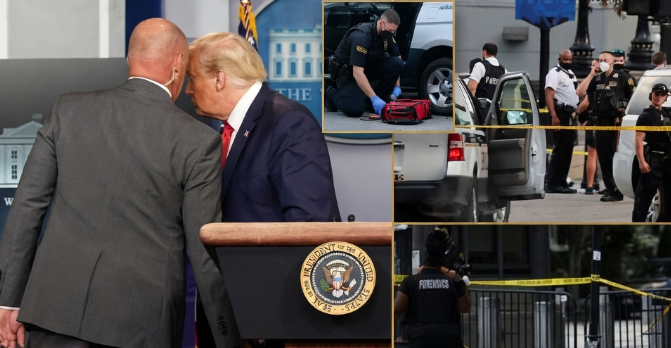
The United States Secret Service is currently leading a rigorous investigation into reports of gunfire that occurred late Sunday night near Lafayette Square, a high-profile park located directly across the street from the White House. Although President Donald Trump was inside the executive mansion at the time of the reported shots, the agency confirmed that there were no injuries and no suspects were immediately located during a tactical search of the premises. While Lafayette Square has been partially closed for renovation, the security perimeter around the Executive Mansion was bolstered immediately following the incident.
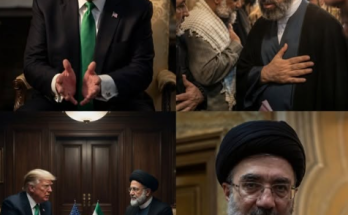
Despite the potential threat, administration officials noted that White House operations proceeded normally, even as the Secret Service began coordinating with the Metropolitan Police Department of the District of Columbia and the U.S. Park Police to determine the source of the gunfire and ensure the safety of the president and the capital’s core. This domestic security concern coincides with a high-stakes diplomatic breakthrough in the Middle East. The United States and Iran have officially entered into a two-week ceasefire agreement, narrowly avoiding a massive escalation of conflict. The deal was struck just as a Tuesday 8 p.m. deadline approached, after which President Trump had threatened to launch significant attacks against the Islamic Republic’s power infrastructure. Speaking from Hungary alongside Prime Minister Viktor Orban, Vice President JD Vance articulated the administration’s firm stance. Vance emphasized that the world requires a stable environment where oil and gas flow freely to maintain affordable energy costs for global citizens. He warned that the United States remains prepared to use “tools in our toolkit” that have yet to be deployed if Iran continues to engage in acts that the vice president described as “economic terrorism.” A pivotal element of these negotiations has been the status of the Strait of Hormuz, a strategic maritime chokepoint that is essential to global energy security. Before the current conflict erupted in late February, this narrow waterway facilitated approximately one-third of all global oil exports. However, Iranian retaliation to U.S. and Israeli actions saw traffic through the strait drop by a staggering 90%, sending shockwaves through international energy markets and alarming U.S. allies. In a series of statements made aboard Air Force One, President Trump revealed that Iran had expanded a previous concession of 10 tankers to now include 20 additional vessels. Trump characterized this development as a significant step toward de-escalation, describing the release of these “big, big boats” as a “tribute” to the United States and a direct result of his administration’s negotiation tactics. The road to this fragile ceasefire was paved with intense rhetoric and social media ultimatums. President Trump had previously taken to Truth Social to warn Iran of “dire consequences” if they did not reopen the waterway or agree to terms within 48 hours. Using provocative language, the president cautioned that “all Hell will reign down” if a deal was not reached, a sentiment he reiterated with a final countdown post. While the Trump Administration frames the recent tanker passage as a clear diplomatic victory, Iranian officials have sought to downplay the significance of the move, suggesting the shipments represent standard regional trade. As the two-week ceasefire begins, the global community is watching closely to see if this pause in hostilities will lead to a long-term resolution or if the Strait of Hormuz will remain a volatile flashpoint in the ongoing struggle for regional influence and energy dominance.