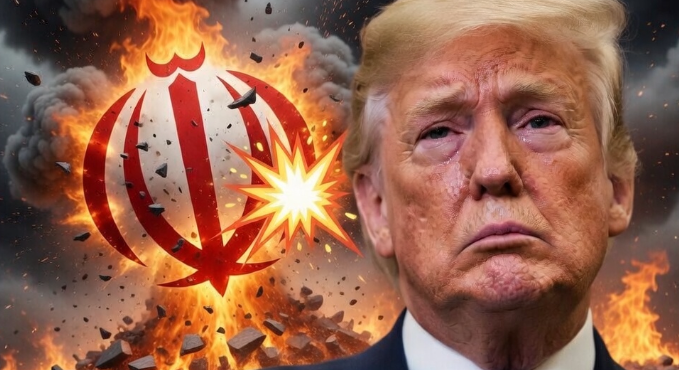
In a high-stakes diplomatic gamble to avert a total regional conflagration, President Donald Trump has notably withheld approval for a 45-day ceasefire proposal aimed at de-escalating the six-week-old war with Iran. The plan, which includes provisions for the reopening of the strategically vital Strait of Hormuz, was drafted by a coalition of mediating nations including Pakistan, Egypt, and Turkey. Despite the urgency of the proposal, which was delivered to the United States and Iran late Sunday, the White House has characterized it as merely “one of many ideas” currently under consideration. Official sources indicate that while the plan is being reviewed, US military operations in the region are continuing apace, and Trump is expected to clarify the administration’s stance during a high-profile news conference at the White House at 1 p.m. ET today.
The proposed ceasefire is viewed by many analysts as a desperate final attempt to prevent Trump from following through on his threats to launch massive strikes against Iranian infrastructure, specifically targeting power plants and energy facilities, should the blockade of the Strait of Hormuz persist. The proposal was formally forwarded to US special envoy Steve Witkoff and Iran’s Foreign Minister Abbas Araghchi. While mediators remain hopeful that an agreement can be reached before a looming Tuesday deadline of 8 p.m. ET, Iran has voiced strong opposition to any short-term truce. Tehran argues that a 45-day window would simply allow its adversaries to regroup and replenish their military assets. Instead, Iran has signaled that it has developed its own response to Washington’s demands, which includes the non-negotiable closure of US bases in the region. As the diplomatic path remains narrow, the military dimension of the conflict continues to intensify. On Monday, the Israeli government, led by Defense Minister Israel Katz and ministry director General Amir Baraam, approved an emergency plan to significantly accelerate the production of Arrow missile interceptors. The Arrow system, developed in conjunction with Israel Aerospace Industries, serves as the top tier of Israel’s multi-layered defense and is essential for intercepting long-range ballistic missiles. This move follows reports from Semafor suggesting that Israel’s interceptor stockpiles were reaching critical lows—a claim that Israeli military officials have denied. Katz emphasized that the production surge is a strategic move to ensure “continued operational freedom” and to send a message to the ayatollah regime that Israel is prepared for a sustained campaign, stating that the state is strong, resilient, and prepared to continue as long as necessary. Adding to the regional complexity, the United Arab Emirates has voiced its own set of stringent conditions for any lasting peace. Anwar Gargash, a senior advisor to the UAE president, stated that any ceasefire must be comprehensive and address the security concerns of Gulf Arab states. Specifically, the UAE is demanding that any deal include limits on Iran’s nuclear program as well as the proliferation of missiles and drones that have been targeting regional neighbors. Gargash warned that a narrow agreement between Israel, the US, and Iran would leave the rest of the region in a state of “continuous instability.” He further noted that the ongoing conflict is likely to solidify the US role in the Gulf and potentially increase Israeli influence across the region. As Tehran continues to demand the removal of Western forces, the likelihood of a diplomatic breakthrough appears slim without a broader non-belligerence agreement that encompasses all Middle Eastern stakeholders.