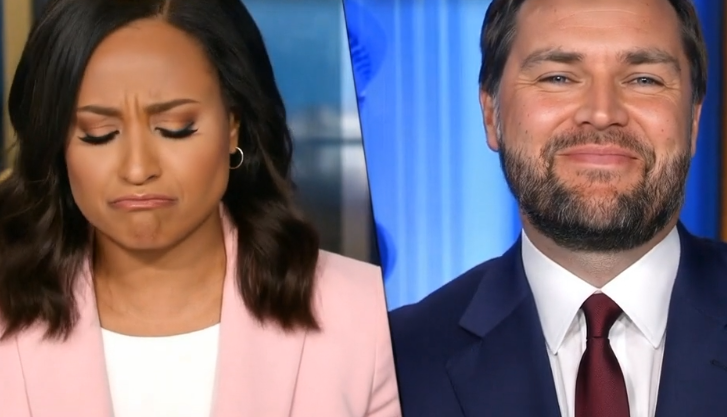
In a high-stakes television exchange that underscores the deepening political polarization in the United States, J.D. Vance, the Republican vice presidential nominee, engaged in a heated debate with NBC News host Kristen Welker. The interview, which centered on the potential use of the Department of Justice (DOJ) to investigate political opponents, showcased Vance’s aggressive defense of Donald Trump’s recent rhetoric. Welker pressed Vance on whether he would support the appointment of a special prosecutor to target Joe Biden and his family, a move critics have labeled as a significant threat to the democratic norm of judicial independence. Vance not only signaled his support for such a move but framed it as a necessary corrective to what he described as the existing “lawfare” being conducted by the current administration.
Vance argued that the outrage from the media and the Democratic Party over Trump’s comments is misplaced. He contended that the Biden administration has already set a precedent by utilizing the legal system to pursue its political rivals, specifically citing the various legal challenges and indictments facing Donald Trump. According to Vance, the House Oversight Committee has already laid the groundwork by identifying what he termed “corrupt business transactions” involving the Biden family. He maintained that investigating these claims is not an act of political retribution but rather the “basic work” required to uncover potential criminal wrongdoing. To Vance, the investigation of a prior administration is a “totally reasonable” action that reinforces the integrity of the American legal system rather than undermining it. A significant portion of the interview was dedicated to the structural independence of the Department of Justice. Welker challenged Vance’s narrative by pointing out that the current investigations into Trump were initiated by Attorney General Merrick Garland and vetted by grand juries consisting of private citizens. However, Vance rejected the premise that the DOJ operates independently of the White House. He emphasized that Merrick Garland was appointed by Joe Biden and remains subject to the President’s authority, suggesting that the “firewall” between the executive branch and federal prosecutors is more of a political fiction than a functional reality. This perspective forms the core of the Republican argument that the current legal proceedings against Trump are politically motivated from the top down. The tension escalated when the discussion shifted to the specific criminal case in New York. Vance raised concerns about a former Department of Justice official who transitioned to a local prosecutor’s office to assist in the case against Trump. He claimed this move was unprecedented in the history of American democracy and served as evidence of a coordinated effort between federal and local authorities to target a political candidate. While Welker countered that personnel moves between Washington and local offices are common and noted that the DOJ found no evidence of improper contact between federal prosecutors and the New York team, Vance remained steadfast. He argued that legitimatizing such “weaponization” of the law is the true danger, and that Trump’s proposed investigations are merely a response to these perceived abuses. Ultimately, Vance framed the debate as a choice between maintaining “law and order” and allowing a double standard to persist. He concluded that investigating “credible arguments of wrongdoing” is not a threat to democracy but a fundamental requirement of a functioning republic. By shifting the focus from Trump’s potential future actions to the Biden administration’s current conduct, Vance sought to neutralize the “threat to democracy” narrative often used against the Republican ticket. The interview served as a preview of the campaign’s legal and political strategy: to fight “lawfare” with investigations of their own, ensuring that the Department of Justice remains at the very center of the 2024 electoral battle.