Late Saturday night, high-stakes negotiations in the United States Senate aimed at confirming dozens of President Donald Trump’s
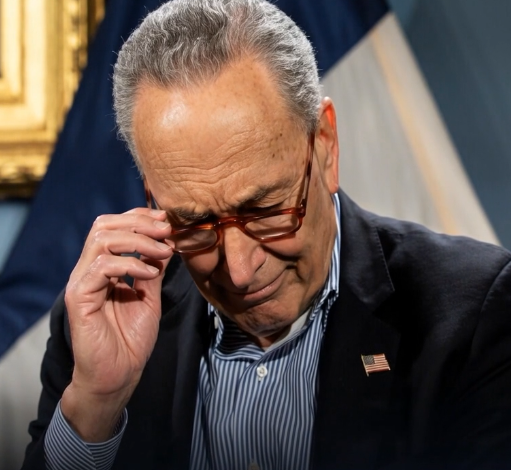
executive and judicial nominees collapsed in a dramatic fashion. Lawmakers had spent hours attempting to reach a bipartisan compromise that would have allowed up to 60 candidates—all of whom had already cleared committee hurdles with support from both parties—to be confirmed before the upcoming recess. However, the talks disintegrated after Trump intervened directly, ordering his party to walk away from the negotiating table. The failure of the deal resulted in senators confirming only seven individuals before departing Washington, leaving the vast majority of the administration’s picks in procedural limbo until at least September. The primary catalyst for the breakdown was a series of fiery posts by Donald Trump on his social media platform, Truth Social. The President accused Senate Minority Leader Chuck Schumer of engaging in “political extortion” by demanding over one billion dollars in concessions to approve what Trump described as a “small number” of highly qualified nominees. In his characteristically blunt style, the President urged Senate Majority Leader John Thune and other Republicans to “GO TO HELL” regarding the proposed deal, suggesting that it would be an embarrassment to the party to accept such terms. Trump encouraged his allies to return home and explain to their constituents the perceived obstructionism of the Democratic party, effectively ending any hopes of a pre-recess agreement. In response, Chuck Schumer framed the situation as a missed opportunity caused by executive volatility. Standing beside a poster-sized version of the President’s social media post, Schumer argued that Trump had “taken his ball and went home” just as a bipartisan solution was within reach. According to the New York Democrat, the negotiations were progressing until the President’s “all-caps” intervention. Schumer defended the Democratic position, noting that their demands included unfreezing billions of dollars for the National Institute of Health (NIH) and various foreign aid programs, alongside a guarantee against future “clawback packages” from the White House. He characterized these as necessary protections for federal funding rather than the extortion labeled by the administration. From the Republican side, Senator John Thune confirmed that while “lots of offers” were exchanged and the sides were close to a “lock-in” several times, the final demands became too lopsided to bridge. Senator Markwayne Mullin of Oklahoma was even more critical of the Democrats, accusing Schumer of constantly moving the goalposts. Mullin stated that every time a deal seemed certain, Schumer would return with increased demands, suggesting that the Democratic leadership never truly intended to reach a consensus. Instead, Mullin argued, they sought to force the President into a position that he could not justify to his base, departing from the historical norms of presidential confirmation processes. As the Senate enters its recess, the path forward remains contentious. While Republicans have indicated they will not pursue controversial recess appointments at this time, Mullin warned that a significant rule change to the confirmation process is being prepared for implementation when lawmakers return in the fall. Schumer, meanwhile, cautioned that any unilateral changes to Senate rules would be a “huge mistake.” With a federal funding deadline looming in September, the collapse of these talks signals a period of heightened friction between the executive branch and the upper chamber of Congress, setting the stage for a volatile autumn session.