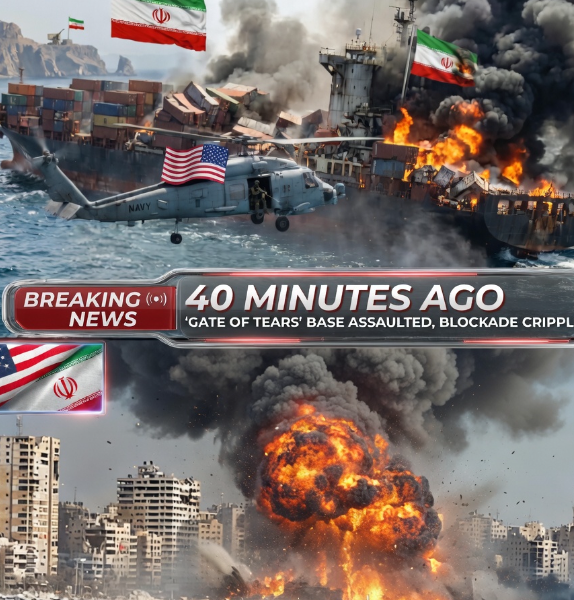
In an era characterized by escalating geopolitical friction and the emergence of sophisticated hybrid warfare, the traditional theater of combat has undergone a radical transformation. No longer defined solely by the grinding attrition of large-scale infantry movements, modern dominance is now dictated by the surgical application of force. This evolution is best illustrated through a high-stakes, fictional scenario involving 120 elite operators from the U.S. Army’s 75th Ranger Regiment. Their target: a fortified Iranian bunker complex situated at one of the world’s most critical strategic chokepoints—the Bab al-Mandab Strait. This scenario serves as a masterclass in understanding how precision, speed, and real-time intelligence have become the primary currencies of the modern battlefield.
The Bab al-Mandab Strait represents one of the most sensitive maritime arteries on the planet, serving as the essential gateway between the Red Sea and the Gulf of Aden. In this crisis simulation, the strait has been effectively shuttered by hostile forces, paralyzing nearly 95% of commercial maritime traffic. This disruption triggers immediate global economic shockwaves, sending oil prices soaring past $100 per barrel and threatening the total collapse of international supply chains. When conventional naval patrols and localized airstrikes prove insufficient to dislodge the enemy from their hardened, subterranean positions, military planners turn to the specialized capabilities of the Rangers to resolve the deadlock through a direct-action raid. The mission plan is a testament to the complexity of modern special operations. Under the shroud of absolute darkness, the Rangers utilize advanced air insertion methods, likely involving stealth-capable helicopters or tiltrotor aircraft designed to penetrate contested airspace undetected. Equipped with state-of-the-art night-vision optics, suppressed weaponry, and integrated communication feeds, the unit’s primary objective is to infiltrate the bunker, neutralize enemy command and control centers, and restore free passage through the strait. The entire operation hinges on the element of surprise and the ability to maintain a blistering tempo that prevents the adversary from mounting an effective counter-response. However, the execution phase reveals the inherent unpredictability of high-risk missions. Upon arrival, the Rangers discover that enemy reinforcements and defensive fortifications exceed initial intelligence estimates. What was intended to be a swift breach evolves into a complex, high-intensity engagement. Demonstrating the adaptability that defines elite units, the operators pivot instantly, utilizing coordinated suppressive fire and synchronized small-unit tactics to penetrate the outer perimeter. Inside the bunker, the environment is a claustrophobic labyrinth of reinforced doors and layered defenses, requiring the 75th Ranger Regiment to employ every ounce of their relentless training in Close Quarters Battle (CQB). In a frantic and violent 45-minute window, the mission reaches its climax. Through sheer aggression, discipline, and tactical synchronization, the Rangers successfully neutralize the command nodes and destroy the bunker’s operational capacity. With the threat eliminated, the blockade collapses and maritime traffic begins to resume. This tactical victory carries profound strategic weight; it demonstrates the capability of the United States to project power decisively into even the most heavily defended environments, sending a clear deterrent message to potential adversaries who might seek to weaponize global trade routes. Reflecting on the broader implications of this scenario, it is clear that the control of strategic infrastructure remains the cornerstone of global security. Disruptions at key chokepoints are no longer regional issues but global crises that require rapid, high-impact solutions. The role of elite forces like the Rangers is not to occupy territory for long durations, but to act as a precision instrument capable of resolving complex crises where scale is less important than accuracy. Ultimately, the story underscores the fragility of global stability and the essential need for inter-service coordination and tactical flexibility in an increasingly uncertain world.