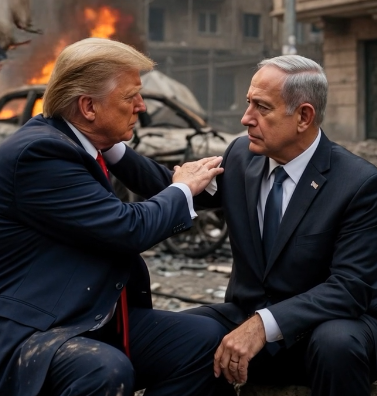
The regional security paradigm in the Middle East has undergone a dramatic and perilous transformation following Iran’s recent decision to launch a series of ballistic missiles targeting Tel Aviv. These projectiles were notably equipped with cluster warheads, a development that signifies a major escalation in the lethality of the current conflict. Tehran has characterized this strike as a direct retaliatory measure following the assassination of a high-ranking Iranian security official by Israeli forces.
Beyond the immediate destruction of infrastructure, the strike resulted in the deaths of at least two civilians, highlighting the inherent danger of using such advanced weaponry in densely populated urban centers. The deployment of cluster munitions—which function by dispersing numerous smaller explosive submunitions over a wide area—presents a burgeoning humanitarian crisis. These devices frequently fail to detonate upon initial impact, leaving behind a legacy of unexploded fragments that can remain lethal for years, effectively turning civilian neighborhoods into hazardous zones and endangering the local population long after the sirens have stopped. This latest offensive is not an isolated incident but rather a critical node in a broader cycle of violence that has intensified significantly since early 2026. The conflict has transitioned from localized skirmishes to a multi-front regional struggle. Tehran has demonstrated an expanded operational reach, launching coordinated strikes not only at Israeli cities but also at U.S. bases throughout the region. Furthermore, the aggression has touched allied facilities in Kuwait, Bahrain, the United Arab Emirates (UAE), and Saudi Arabia, suggesting a strategic attempt to undermine the security architecture of the Gulf region. In response to these provocations, the United States and Israel have conducted high-stakes strategic airstrikes deep within Iran. These missions are specifically designed to cripple military and nuclear infrastructure, aiming to neutralize the source of the ballistic threats before further launches can occur. The technical dimensions of this conflict are equally concerning, as the proliferation of cluster warhead technology begins to outpace established defensive measures. Israel currently relies on some of the world’s most sophisticated aerial defense arrays, including the Iron Dome and the Arrow-3 system. However, the sheer volume of incoming fire, combined with the complex flight patterns of scattered submunitions, has made achieving a total interception rate an increasingly elusive goal. When a single missile can deploy dozens of smaller warheads, the defensive burden on these systems increases exponentially, often leading to saturation points that leave civilians in a state of constant peril. This “arms race” between missile technology and interception capabilities has created a state of perpetual fear for residents across the region, as the traditional safety net provided by these systems faces its most rigorous test to date. Finally, the global repercussions of this friction are manifesting most clearly in the energy markets. Due to the persistent and credible threats against Gulf oil and gas infrastructure, global energy prices have surged significantly, creating economic ripples that are felt far beyond the borders of the Middle East. International observers and geopolitical analysts are expressing a growing sense of alarm, warning that the current trajectory is leading toward a full-scale regional war that could involve global powers directly. Despite the gravity of the situation, diplomatic efforts have reached a frustrating stalemate. Both Iran and Israel have maintained a resolute stance, showing little inclination toward de-escalation. This lack of a diplomatic pathway forward leaves the international community in a position of unprecedented uncertainty, with far-reaching implications for global security and economic stability.