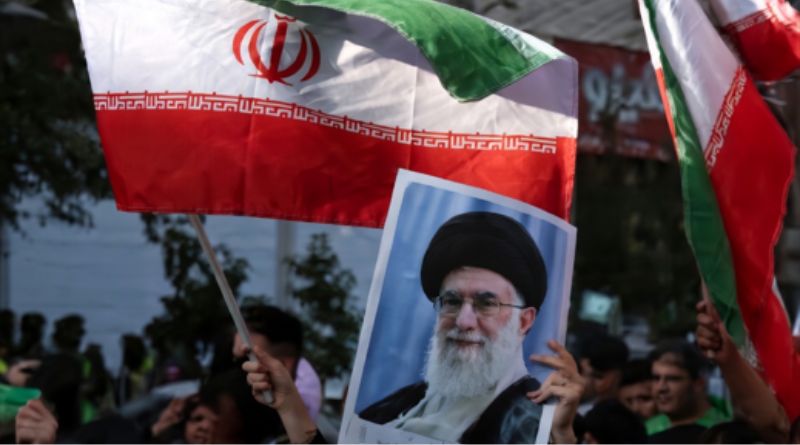
The geopolitical landscape of March 2026 has been thrust into a state of profound uncertainty following a sharp escalation in Middle Eastern tensions. Long-standing rivalries—once managed through proxy conflicts, sanctions, and cautious diplomacy—have intensified in ways that are increasingly difficult to contain. Reports surrounding the death of Iran’s Supreme Leader have added a new layer of instability, raising urgent questions about leadership succession, internal cohesion, and the direction of Tehran’s strategic posture in the weeks ahead.
In the immediate aftermath, rhetoric from Iranian officials has grown more forceful, signaling that the country may be entering a more assertive phase. While such language often serves both domestic and international audiences, it has nonetheless heightened concern among global intelligence communities. Analysts are closely monitoring military movements, communications patterns, and regional activity for signs of potential escalation. However, much of the available information remains fragmented, leaving room for interpretation and, in some cases, exaggeration.
For the United States, the situation has prompted a shift from routine vigilance to heightened alertness. Defense officials are reassessing potential vulnerabilities and reinforcing existing security measures, particularly around key strategic assets. Despite speculation circulating online, there has been no confirmed indication of an imminent large-scale attack on the U.S. mainland. Experts caution that, while risks cannot be dismissed, direct confrontation at that level would represent a dramatic and highly consequential departure from established patterns of conflict.
Historically, Iran’s approach has relied on indirect methods of exerting pressure, including regional proxies, cyber operations, and targeted disruptions in critical waterways. These tactics allow Tehran to project influence while avoiding the full-scale repercussions of direct engagement with a militarily superior adversary. As a result, many analysts believe that any immediate response is more likely to occur within this familiar framework rather than through unprecedented long-range strikes.
Nevertheless, the range of potential scenarios being discussed within policy circles remains broad. Some focus on symbolic targets in the region, while others consider the possibility of cyberattacks against infrastructure or coordinated actions involving allied groups. The uncertainty surrounding leadership dynamics in Tehran only complicates these assessments, as internal power struggles can influence both the timing and nature of external actions.
Within the United States, public reaction has reflected the ambiguity of the moment. News coverage, social media, and unofficial sources have created a fast-moving information environment where verified facts and speculation often intermingle. This dynamic can amplify anxiety, particularly when dramatic claims circulate without clear evidence. Officials have emphasized the importance of relying on credible sources and avoiding the spread of unverified reports that may contribute to unnecessary alarm.
At the strategic level, the situation underscores the evolving nature of modern conflict. Advances in missile technology, cyber capabilities, and surveillance systems have reduced the protective advantages once provided by geography. While the United States retains significant defensive and deterrent capabilities, the perception of vulnerability has grown in parallel with technological change. This shift has implications not only for military planning but also for public consciousness.
The federal government has responded by reinforcing a posture of readiness while avoiding alarmist messaging. Statements from senior officials have reiterated that any attack on U.S. interests would be met with a decisive response, while also emphasizing the importance of stability and measured decision-making. This balance reflects a broader effort to deter escalation without contributing to panic.
As developments continue to unfold, the global community remains focused on the interplay between rhetoric, capability, and intent. The coming days will likely be shaped as much by perception and signaling as by concrete actions. In such an environment, restraint, clarity, and accurate information become critical tools in preventing miscalculation.
Ultimately, this moment highlights how interconnected and sensitive the modern geopolitical system has become. Events in one region can rapidly influence perceptions and decisions across the world, compressing reaction times and raising the stakes of every move. While uncertainty persists, it is clear that the outcome will depend not only on military capabilities but also on the choices made by leaders navigating an increasingly complex and volatile landscape.