Trump’s Moment of Silence Sparks Debate About Political Communication and Media Attention
In a political environment dominated by nonstop commentary, partisan disagreements, and rapid-fire news coverage, even a brief pause during a presidential speech can attract attention. When President Donald Trump pauses before addressing an audience, the moment may be interpreted in different ways, depending on the circumstances and the perspectives of those watching.
The significance of such a moment, however, depends on the context. Without a verified recording, an identifiable event, and reliable reporting, claims that a particular pause stunned Washington or became a major political controversy should be treated cautiously.
Part I: The Power of a Pause
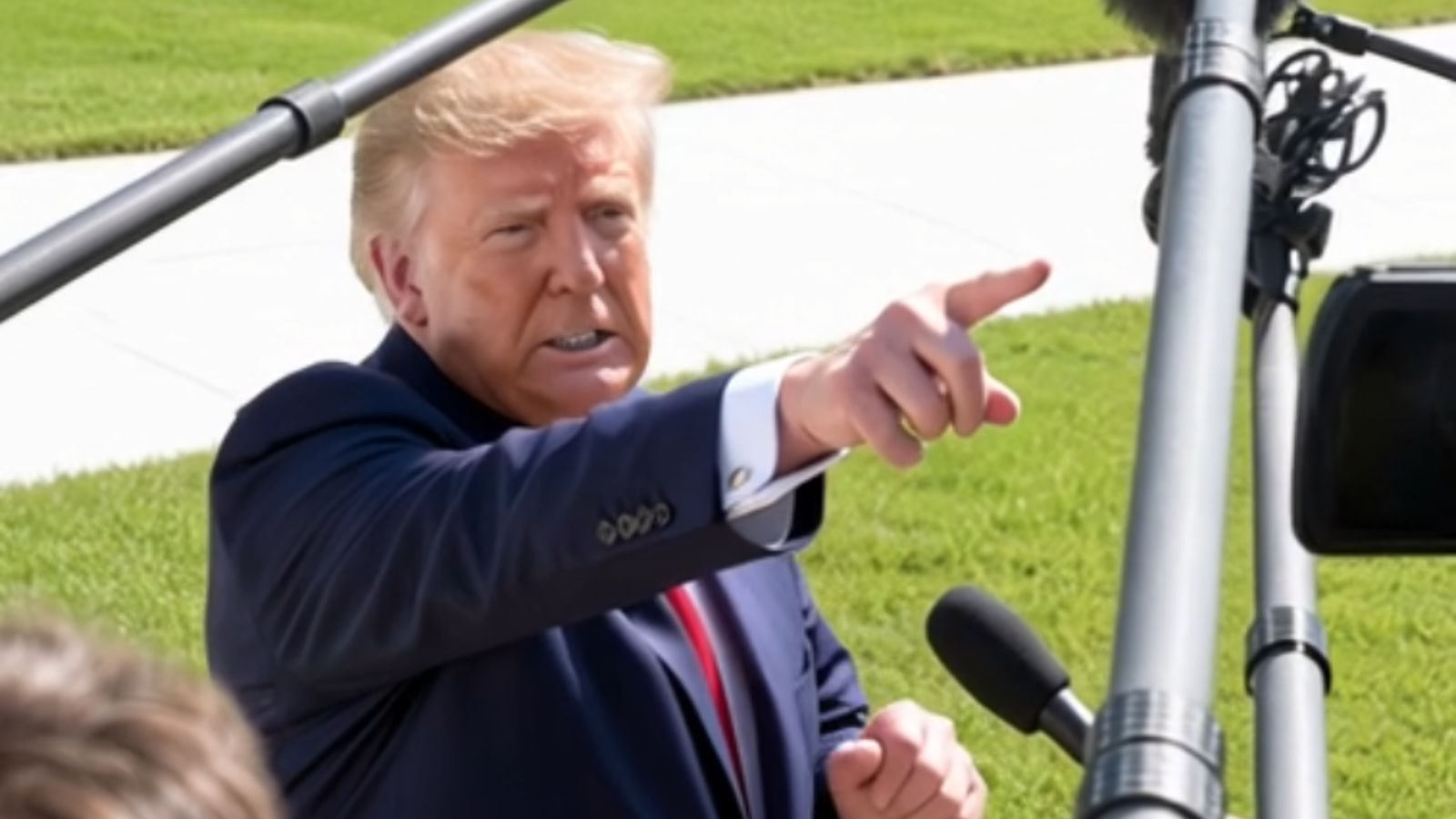
Donald Trump is widely associated with an energetic, conversational speaking style that frequently includes sharp criticism of political opponents, policy announcements, and unscripted remarks. Against that backdrop, a prolonged pause during a public address could stand out to viewers accustomed to his usual delivery.
In public speaking, silence can serve several purposes. A speaker may pause to collect thoughts, emphasize an important point, allow an audience to react, or transition between subjects. Sometimes, a pause is simply an ordinary part of delivering a speech.
The meaning of a particular moment cannot be established from its appearance alone. Video footage, the surrounding remarks, and the circumstances of the event would be necessary to determine what happened and whether the pause carried any deliberate significance.
Part II: How Social Media Shapes Political Narratives
In today’s digital environment, short video clips can circulate independently of the speeches from which they originate. A few seconds of footage may be shared repeatedly, accompanied by competing captions and interpretations.
Supporters might interpret a leader’s quiet demeanor as composure or reflection. Critics might regard the same moment as unremarkable or question why it is receiving attention. Other viewers may simply be curious about the circumstances.
These reactions illustrate how political identity can influence the interpretation of public events. However, claims about millions of views, widespread controversy, or a particular level of public interest require verifiable engagement data and credible reporting.
A short clip can attract attention without necessarily representing the broader public’s reaction to a speech or its policy implications.
Part III: The Role of Silence in Public Speaking
Silence has long been recognized as a rhetorical device. Speakers use pauses to create emphasis, give audiences time to absorb information, and establish a more deliberate rhythm.
In televised political communication, pacing can influence how a speech is perceived. A carefully timed pause may draw attention to a subsequent statement, while an unexpected interruption may prompt questions about what happened.
Nevertheless, the existence of a pause does not establish that it was strategically planned. Determining whether a moment was intentional requires more than speculation about a speaker’s body language or presumed psychological state.
For journalists and commentators, distinguishing observable facts from interpretations is essential to responsible political analysis.
Part IV: Beyond Political Theater
Presidential speeches are evaluated not only for their delivery but also for their substance. Statements about economic policy, government regulation, judicial appointments, and national security can have consequences extending beyond the immediate news cycle.
A discussion of Trump’s public speaking style should therefore consider both presentation and policy. A dramatic moment may become a topic of conversation, but its political importance depends on the circumstances and the substance of the address.
Likewise, the absence of a White House explanation should not automatically be interpreted as evidence of a deliberate communications strategy. An official response, or the lack of one, must be understood within the broader context of the event.
Part V: What the Moment Really Tells Us
The broader lesson is that modern political communication operates at the intersection of public policy, personality, television, and social media. In this environment, small moments can acquire meaning far beyond their original context.
Whether a presidential pause reflects deliberate emphasis, ordinary speech patterns, or an unexpected interruption cannot be determined without reliable evidence. What can be examined is how audiences interpret such moments and how online platforms can amplify competing narratives.
Ultimately, responsible political analysis requires separating what a recording demonstrably shows from what commentators believe it means. Before describing a moment as a defining political event, readers should have access to the original footage, the complete speech, and credible reporting that establishes the facts.
In a media environment where interpretation often travels faster than verification, context remains essential.