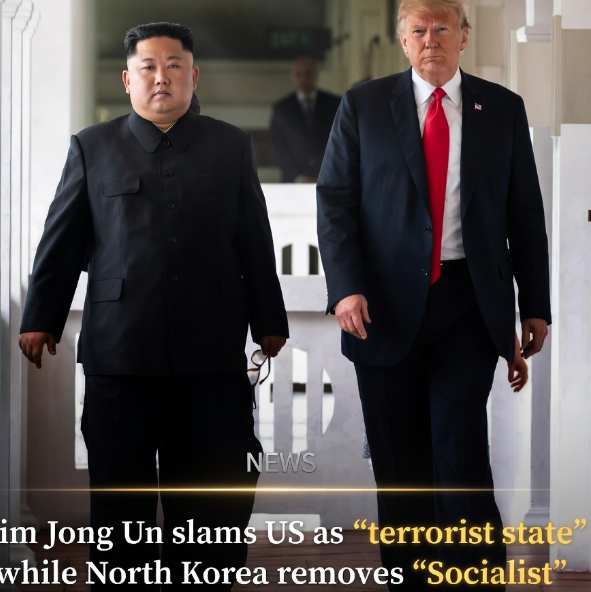
During a high-stakes session of the Supreme People’s Assembly, Kim Jong Un delivered a blistering denunciation of the United States, branding it a “terrorist state.” In a speech that resonated with global geopolitical tensions, Kim specifically criticized Washington’s military involvement in Iran as “state terrorism” and “dominationist.” This rhetoric served as a backdrop for a vow to maintain North Korea’s nuclear arsenal “permanently and irreversibly,” a move he justified by citing the “unchangeable nature” of American hostility. Interestingly, despite this aggressive stance, Kim noted he remains “prepared to respond” to President Trump or other leaders if they seek a path of “peaceful coexistence.”
The session was equally significant for its radical internal restructuring. In a move that surprised international observers, Pyongyang officially removed the term “socialist” from its Socialist Constitution, a symbolic rebranding that suggests a shift in the regime’s foundational ideological framework. Furthermore, the Democratic People’s Republic of Korea solidified its stance against its neighbor, with Kim labeling South Korea the “most hostile state.” This geopolitical shift was accompanied by the transformation of the Ministry of Social Security into the nation’s first formal police force, a move designed to specialize and centralize legal control over the populace. Shifting focus to the domestic front, Kim unveiled a “new national prestige” strategy that prioritizes the quality of life for citizens. Central to this plan is a massive construction initiative involving 370,000 new homes, including dedicated housing for workers in mining regions. Additionally, Kim addressed the country’s looming demographic crisis by fast-tracking healthcare and childcare policies intended to boost the birth rate. By framing these developments as a pivot toward public welfare, Kim aims to maintain domestic stability while asserting his status as a nuclear-armed global player.